A welcome gift can make a strong first impression, but it can’t replace the equipment and access a new hire needs to start. For new hire onboarding kits in Singapore, the stated minimum order is 100 pieces. Your budget depends on the items selected, how they’re branded, and whether the kit needs to suit different roles or work arrangements.
It makes sense to want new hire onboarding kits in Singapore to feel thoughtful without filling them with items employees won’t use. This guide explains how to plan a practical budget, choose useful branded essentials, and bring welcome gifts together with work equipment, access credentials, and stationery. You’ll also learn how to keep the contents cohesive, so a warm first-day gesture supports the employee’s actual start at work.
Key Takeaways
- Set a kit budget by hire level and prioritise a few useful items over a box filled with low-value extras.
- Choose branded essentials employees will use, then add a personal note or company culture materials to make the welcome feel considered.
- Use welcome gifts to support a positive first impression, while treating thoughtful onboarding and recognition as the foundation of employee connection.
- Plan equipment, access credentials and stationery alongside gifts so new hires can settle in and begin work smoothly.
1. How much should I budget for onboarding kits in Singapore?
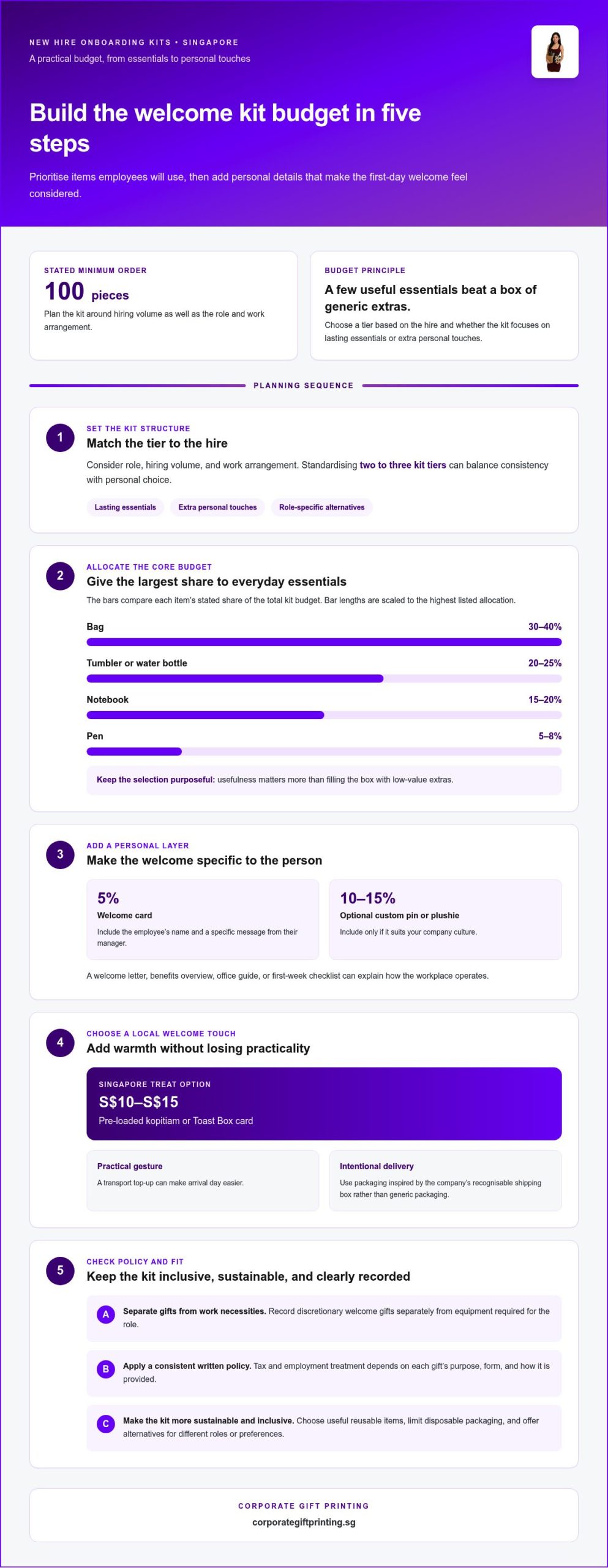
Choose a tier based on the role, hiring volume, and whether the kit focuses on lasting essentials or includes extra personal touches.
Allocate the budget around items employees can use. A bag may take 30-40% of the total, while a tumbler or water bottle takes 20-25%. Reserve 15-20% for a notebook and 5-8% for a pen. A considered selection creates more value than adding generic corporate gifts just to make the welcome kit look full.
Personal details help the kit express company culture. Set aside 5% for a welcome card, then include the employee’s name and a specific message from their manager. Add a welcome letter, benefits overview, office guide, or first-week checklist to explain how your workplace operates. A custom pin or plushie is optional, with 10-15% of the budget allocated if it suits your culture.
For a Singapore touch, include a kopitiam or Toast Box card pre-loaded with S$10 to S$15. Shareable food can make the welcome feel warm, while a transport top-up offers a practical arrival-day gesture. Use packaging inspired by your company’s recognisable shipping box to make delivery feel intentional, not generic.
Tax and employment treatment depends on each gift’s purpose, form, and how it’s provided. Record discretionary welcome gifts separately from equipment required for the employee’s role, and follow a consistent written policy.
For a more sustainable and inclusive kit, choose useful reusable items, limit disposable packaging, and offer alternatives for different roles or preferences. Standardising two to three kit tiers can help balance consistency with personal choice.
2. Choosing useful items and cohesive branding
Begin with the employee’s first working day, not the logo. A hardcover notebook with 80gsm paper, a pen, and a 500-600ml stainless steel tumbler can support daily routines. Select items people will use before adding decorative touches; a thoughtful corporate gift earns its place through usefulness.
Keep the visual identity consistent across the bag, notebook, and card. Use the same logo treatment and a restrained colour palette, then personalise one detail, such as the employee’s name on a welcome note. Effective branding identifies the company without turning every surface into an advertisement.
A core kit with optional variations balances repeatable purchasing with the needs of different roles. An office-based employee, for example, may value desk accessories, while someone who travels may use a compact bag. Add a screen clip or another workspace item only if it supports the recipient’s routine.
For apparel, consider Singapore’s warm, humid conditions and choose comfortable, breathable materials. A T-shirt or light outer layer can make a wearable onboarding gift, but sizing and style affect whether it gets used. Collect preferences after the contract is signed and include the chosen size in pre-employment paperwork. If sizing is uncertain, choose a non-sized item instead.
Pre-made kits suit teams that need consistent contents and straightforward repeat ordering. Customised kits work better when roles, brand details, or employee preferences call for specific choices. A practical middle ground is a standard core kit with a few optional items. Essentials might include a notebook, pen, drinkware, and a personalised welcome card.
Match the branding method to the item, then review legibility and placement before production. For a useful tech addition, consider electronic corporate gifts that align with employees’ everyday work. This final detail matters: gifting feels considered when the item serves a clear purpose and the brand presentation stays cohesive.
3. Why onboarding gifts matter for retention
A useful welcome gift can make a new employee feel recognised from day one, but it works best alongside clear onboarding and manager support. The Wynhurst Group reports that employees are 69% more likely to stay for at least three years when they experience great onboarding. Gallup and Workhuman report that employees who receive quality recognition from day one are 45% less likely to turn over. These findings support a broader point: gifts can contribute to a positive start, but they don’t replace a thoughtful employee experience.
Choose everyday items that earn a place in the employee’s routine. A sturdy tumbler, notebook, or practical laptop accessory can make the welcome useful beyond the first day. Match each item to the person’s role and workplace culture rather than relying on a logo alone. A quality item makes a more considered corporate gift than several disposable giveaways.
For an executive hire, a premium gift can reflect the significance of the appointment without becoming showy. Consider a refined desk accessory or well-made travel item, paired with a printed note from a senior leader. A specific message about the person’s role makes the gesture more meaningful than elaborate packaging alone.
Avoid low-quality tech gifts, such as cheap USB drives and flimsy power banks. An item that fails quickly can undermine the welcome it was meant to create. Check that electronics suit the employee’s devices and work needs, and choose fewer dependable pieces over a larger assortment of forgettable products.
Food can add a shared moment to the welcome. Individually packed local snacks or treats for a team pantry give colleagues an easy reason to connect, while a note can explain the gesture. For international delivery, avoid food items. Keep the printed message and packaging aligned with company culture so the kit feels personal rather than generic.
Recognition also matters beyond the first day. Bersin by Deloitte reports 31% lower voluntary turnover at companies with strong recognition programmes. Pair the welcome gift with genuine appreciation and follow-up conversations, so the first impression develops into sustained support.
4. Work equipment, access credentials and stationery
A welcome kit should support the employee’s first working hours, not just create a strong unboxing impression. Separate gifts from essentials needed to do the job. For an office-based hire, that might mean a notebook and pen alongside a laptop prepared by the IT team. For a remote employee, include clear instructions for collecting equipment and receiving system access.
Keep access credentials out of gift packaging. Coordinate account setup, building passes, and any required authentication with the relevant internal teams. Give the employee a simple first-day checklist explaining where to collect a pass, how to sign in, and whom to contact for technical help. Never print passwords or confidential access details on welcome-kit materials.
For stationery, choose a hardcover notebook with 80gsm paper for everyday notes and onboarding tasks. A curated set can pair it with a pen and a welcome letter, while leaving space for role-specific materials. Put company policies or a first-week schedule in a separate folder, so practical documents stay easy to find.
Technology gifts can complement work equipment, but they shouldn’t replace it. A magnetic wireless charging phone stand may suit a desk if it works with the employee’s device. Compare compatibility and quality before selecting electronics. Don’t add an item solely because it looks impressive in the box.
Use the container to make delivery straightforward. A tote bag can hold stationery, printed guides, and small personal items, while a backpack may better suit employees who commute with equipment. If you include apparel, account for size and comfort preferences. The contents should be useful and easy to carry between home, office, and onboarding sessions.
Before packing, map each item to a clear purpose: work equipment enables the role, credentials provide approved access, and stationery supports daily tasks. Then add welcome gifts around those essentials. For help creating a coordinated set of practical branded items, plan your employee welcome kit.
Corporate Gift Printing: Customized Bags & Pouches
Corporate Gift Printing can help you build onboarding kits around practical branded items employees will use. When you’re ready to bring together customised bags and pouches, business stationery, travel accessories, or electronic gifts, the team can help create a cohesive welcome. A tote or pouch can hold printed guides and personal essentials, while a carefully selected desk item can support the employee’s daily routine. Align the item, branding, and presentation with your workplace identity, and keep role-specific equipment and access credentials separate. This helps the kit feel considered without confusing gifts with the tools employees need to do their jobs. Contact Corporate Gift Printing to discuss your onboarding kit.
Make the Welcome a Meaningful Beginning
Treat the welcome kit as the first expression of how your organisation works. It can’t carry the entire onboarding experience, but it can help the employee feel considered as they settle into a new team. A well-chosen detail connects company identity with everyday usefulness and gives the new hire a tangible reminder that their arrival matters.
When planning new hire onboarding kits in Singapore, think beyond the handover. Consider how each item will fit the employee’s routine, represent your workplace, and complement the support they receive from colleagues. This perspective makes gifting a thoughtful part of the employee experience rather than a one-off gesture.
Corporate Gift Printing offers customised bags and pouches, electronic corporate gifts, and travel accessories for branded employee gifting. Whether you’re planning a practical welcome or a more elevated presentation, these categories can help bring your intended impression to life.
Explore your onboarding kit options and take the next step towards a welcome that feels personal, useful, and true to your organisation.
Frequently Asked Questions
Is there a minimum order quantity (MOQ)?
The stated minimum order for employee onboarding kits in Singapore is 100 pieces. Use this as a planning point when preparing a company-wide order, and consider how many kits you’ll need for upcoming hires as well as current starters. A consistent quantity plan can help you keep the kit contents and branding aligned across each new employee’s first day.
Building an onboarding kit?
Start by sorting items into three groups: work essentials, useful branded gifts, and personal touches. For example, prepare a notebook and pen, add a practical daily-use item, then include a welcome message or first-week schedule. Match the contents to the employee’s role and work arrangement. Keep passwords, building access details, and other confidential information out of the gift kit.
Can I personalise each onboarding kit with the new hire’s name?
Yes. A personalised printed message can include the new hire’s name and make each kit feel individual. Prepare a final name list using the spelling employees use professionally, then match each name to the correct kit before printing or packing. A manager’s short welcome message adds a human touch without changing the core items selected for the team.
Can you include a welcome card in the kit?
Yes. A welcome card is a simple way to make the kit feel personal. Include the employee’s name, start date, and a short greeting from their manager or team. You can also add a practical pointer, such as where to meet on arrival, while keeping passwords and sensitive access details off printed materials.
Can you ship welcome kits to new hires’ homes?
Yes. Welcome kits can be delivered to a specified address, including an employee’s home. For remote hires, collect the correct delivery details before packing and clearly associate the recipient’s name with the shipment. Corporate Gift Printing handles packing and delivery in Singapore, helping businesses send branded gifts directly to employees instead of coordinating separate handovers.
How much should I budget for onboarding kits in Singapore?
To choose a suitable tier, identify the items that serve the employee’s everyday needs, then weigh optional personal touches against hiring volume and the consistency you want across roles.