A giveaway can keep a campaign going after an event ends. Marketing campaign promotional items can feature your company logo, campaign artwork, an event message, or other brand elements. Add a QR code to connect the item with online content or an offer, linking a physical gift to your digital campaign.
Choosing a giveaway means more than placing a logo on an object. The right item should suit the audience, occasion, and campaign goal, whether you want to build awareness, reward participation, or support a product launch.
This guide explains how to choose customised campaign merchandise, what affects costs in Singapore, and how to plan practical giveaways for different audiences and occasions. It also shows how to connect merchandise with digital touchpoints, so every item has a clear role in the wider campaign. From bags and stationery to travel accessories and electronic gifts, a thoughtful choice helps your brand make a considered impression.
Key Takeaways
- Match each giveaway to your campaign goal, brand identity and the audience’s everyday needs.
- Plan your budget around the item, quantity, branding method, packaging and sourcing requirements.
- Choose practical seasonal gifts that suit how recipients will use them, from exhibitions to online contests.
- Use QR codes to connect physical merchandise with relevant digital content or campaign offers.
Choosing products to fit an organization’s mission, offerings, brand, and strategy
Start with the campaign goal, then choose an item that keeps your brand useful beyond the first encounter. For a product launch, a practical gift can keep the launch message visible after attendees leave.
Product Fit and Brand Awareness
Promotional products are useful items branded with a company name, campaign message, or logo. They build awareness by bringing that identity into everyday settings, from a tote bag carried on the commute to an accessory used at work. Match the item to your organisation’s mission and audience. For example, a travel-focused campaign is better suited to travel accessories than unrelated merchandise. Check that the item’s quality, design, and purpose reflect the standards you want your brand to represent.
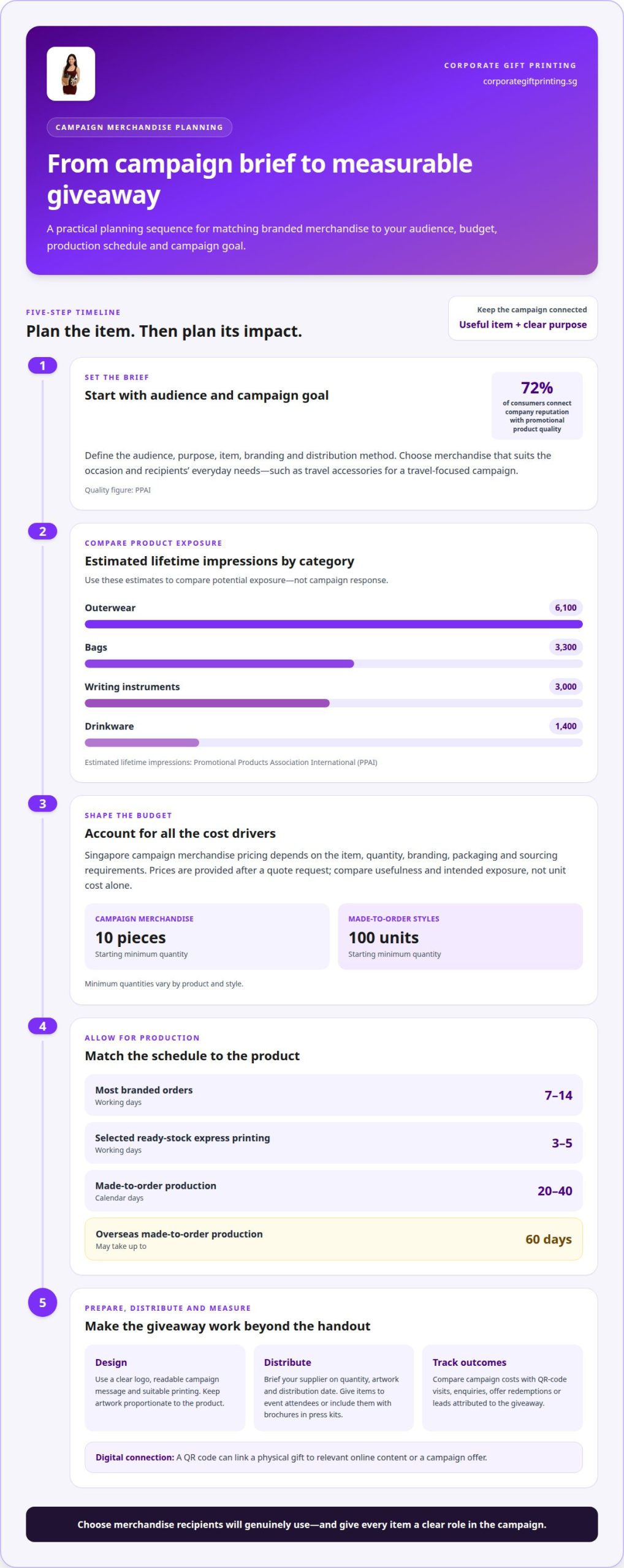
Use consumer attitudes as a quality guide. According to PPAI, approximately 72 percent of consumers connect a company’s reputation with the quality of its promotional products. A branded item should therefore feel considered, not disposable. Electronic gifts, travel accessories, or luxury gifts can suit client relationships where presentation matters, while simpler merchandise may work for broad distribution.
Rules for Promotional Gifts
In Singapore, use the recipient’s employer or agency policy on gifts and conflicts of interest to guide approval and acceptance. Apply that standard separately to employees, customers, and public-sector recipients, since what is appropriate for one audience may not suit another. For public-sector recipients, keep gifts unrelated to official decisions, tenders, or duties, and do not assume branding makes a gift acceptable.
For employee and customer gifts, document the campaign purpose, approval, and distribution plan. A modest branded item tied to a product launch is different from a personal gift linked to a purchasing decision.
From Awareness to Advocacy
Plan how each recipient will encounter and use the merchandise. At an exhibition, tote bags can carry brochures while raising visibility across the venue. After a launch, a useful branded accessory can bring the campaign into a client’s routine. Employees can also become brand ambassadors when they receive merchandise that reflects shared values and feels appropriate to use. Choose items they would genuinely carry or use, rather than focusing on logo size alone.
Before production, define the audience, purpose, item, branding, and distribution method. This sequence helps align the giveaway with your organisation’s identity and makes each gift feel like a deliberate part of the campaign.
How much do custom campaign merchandise cost in Singapore?
In Singapore, campaign merchandise costs depend on the item, quantity, branding, packaging, and sourcing requirements. Choose based on intended exposure and usefulness to recipients, not unit cost alone.
Product Categories and Impressions
Estimated lifetime impressions vary by product: outerwear reaches 6,100, bags 3,300, writing instruments 3,000, and drinkware 1,400, according to the Promotional Products Association International (PPAI). These figures can help compare potential exposure, but they don’t measure campaign response. Match the category to the purpose, such as stationery for a corporate seminar or bags for event attendees.
Prices depend on the selected item, quantity, branding, packaging, and sourcing requirements, and are provided after a quote request. Minimum quantities and production times also vary: campaign merchandise starts at 10 pieces, while made-to-order styles start at 100 units. Most branded orders take 7 to 14 working days; selected ready-stock items can be express printed in 3 to 5 working days. Made-to-order production takes 20 to 40 calendar days, or up to 60 days for overseas production.
Design, Printing, and Perceived Value
Design influences whether recipients see an item as useful corporate merchandise or disposable advertising. A clear logo, readable campaign message, and suitable printing help the product represent your brand well. Keep the artwork proportionate: a tote bag and a compact accessory offer different amounts of space and visibility. For gifts, consider how presentation and packaging support the campaign’s purpose.
Use recipient surveys to find out which items people would use, then give your supplier and distributor a clear brief covering quantity, artwork, and distribution date. Merchandise can be given to event attendees or included with brochures in press kits. Measure return on investment (ROI) by tracking campaign costs against outcomes such as QR-code visits, enquiries, offer redemptions, or leads attributed to the giveaway.
For sustainability-led campaigns, prioritize durable, reusable items and consider material and packaging choices alongside the campaign’s environmental goals. To turn a defined brief into branded gifts, explore customised corporate gifts.
Seasonal and audience-relevant giveaways
A seasonal giveaway feels relevant when its timing, recipient, and use align. A thoughtfully presented gift may suit a year-end client appreciation campaign, while a compact travel accessory can support a travel-themed promotion. Start with the audience and marketing strategy, then choose something recipients can use after the campaign ends. This makes brand recognition feel considered rather than incidental.
Social media contests can give people a reason to engage with a giveaway. For example, invite participants to share a campaign post, follow an account, or tag someone who would value the prize. Set a clear entry action and explain the prize before the contest begins. A useful branded item can help make the campaign memorable, while online activity extends its visibility beyond direct recipients.
At exhibitions and roadshows, attendees often move between booths and sessions, making compact gifts practical choices. A small accessory or stationery item is easy to carry and can keep your brand visible after conversations end. Trade show giveaways can also support a specific interaction, such as inviting visitors to learn about a product or leave their details. Match the gift to that purpose instead of distributing items without a campaign connection.
For broad distribution, consider cost-effective stationery, reusable bags, or compact accessories. Choose items that suit the audience and are easy to distribute at a busy event. A reusable bag may suit a public-facing promotion, while office-oriented stationery may work for a business audience. The goal is useful exposure, not simply a high volume of giveaways.
Plan timing and quantity around the occasion, audience, and distribution point. For seasonal gifting, allow time for branding and packaging before the campaign date. For a social contest, coordinate the prize with the campaign message and entry period. These choices help each giveaway feel relevant, engage recipients, and strengthen brand visibility throughout the season.
Integrating promotional items with digital campaigns
Give each promotional item a clear digital next step. A QR code on a notebook, tote bag, or drinkware can lead to a campaign page, product details, or an offer. This connects the physical gift with the target audience’s next online interaction.
Promotional items offer tangible brand exposure, while digital channels can guide people to online content. Unlike an email or digital advertisement, a physical giveaway can stay with its recipient after the initial campaign interaction. Use both channels together: the item builds recognition, and the digital destination explains the offer or invites action.
Plan the connection in sequence. First, define the marketing goal, such as product discovery or employee appreciation. Next, match the item and message to the audience. Then direct its QR code to a mobile-friendly page with one relevant action, such as viewing a product or registering interest. For example, a launch giveaway could lead to product details rather than a general homepage. Keep the campaign wording consistent across the item, social posts, and landing page.
Start measurement by defining the action you want recipients to take. Track QR visits, enquiries, registrations, or offer redemptions, then compare those outcomes with campaign distribution and costs. A dedicated campaign page can help distinguish responses from other marketing activity. Digital engagement shows what happens after a scan, while the item itself supports offline visibility.
Common risks include a code leading to an expired offer, a page that does not work well on mobile, or a gift that does not suit the audience. Test the QR code and destination before distribution, and make sure the offer and campaign dates are current. Explain what recipients will find before inviting them to scan.
To increase brand visibility with a coordinated physical and digital campaign, bring your item, audience, and campaign message together through customised corporate gifts.
Corporate Gift Printing
Corporate Gift Printing helps businesses turn campaign plans into branded merchandise suited to their audience and purpose. For a seasonal promotion, event, or client-gifting campaign, the team sources, customises, and prints gifts with your company identity.
Options include Customized Bags & Pouches, Electronic Corporate Gifts, Travel Accessories, and Business Stationeries. Share your campaign goal, intended recipients, and distribution plans to guide the selection. A practical item for event attendees may differ from a considered gift for clients or employees, while consistent branding keeps each choice connected to the campaign.
Contact Corporate Gift Printing to discuss merchandise for your next campaign.
Shape Your Next Campaign with Purpose
A seasonal campaign can leave a lasting impression when its physical gift and digital experience feel like parts of the same idea. Before choosing an item, define what you want recipients to remember and what action you hope they’ll take next. That intention can guide decisions about branding, presentation, and how the gift fits your broader marketing strategy.
Thoughtful marketing campaign promotional items give your brand a tangible role in the experience. Corporate Gift Printing offers Customized Bags & Pouches, Electronic Corporate Gifts, and Travel Accessories to help businesses turn campaign ideas into branded merchandise. Share your campaign direction and intended audience to start shaping an item that reflects your organisation’s identity.
Contact Corporate Gift Printing to discuss your next campaign and take the next step toward a considered brand experience.
Frequently Asked Questions
Can Promotional Gifts Be Customised?
Yes. Corporate Gift Printing can source and customise gifts with a company logo, slogan, or personalised message. For a client welcome pack, for example, choose an item and printed message that reflect the relationship you want to build. Customisation connects the gift to your organisation rather than making it feel like a generic giveaway.
How Do Organizations Use Them?
Businesses use promotional gifts for corporate events, marketing campaigns, trade shows, and employee reward programmes. For example, a company might give new employees branded stationery during onboarding or include a customised gift in a client appreciation package. The recipient and occasion shape the choice, helping the item feel relevant rather than like an unrelated extra.
Which Promotional Gift Should You Choose?
Choose a gift that fits the recipient’s routine and your relationship with them. Travel accessories may suit clients who travel for work, while business stationery can work for a training session or internal workshop. For a more elevated client gesture, consider a luxury corporate gift. Start with the recipient and occasion, then choose an item that represents your organisation appropriately.
What Promotional Items Are Most Effective for Marketing Campaigns?
The most suitable item depends on the campaign audience and intended action. A customised bag may help carry event materials, while an electronic corporate gift can suit a client appreciation initiative. Consider whether recipients will find the item useful and whether its branding fits your message. Effectiveness is easier to assess when the campaign has a defined outcome, such as enquiries or registrations.
How Do You Choose Promotional Products for a Target Audience?
Start by grouping recipients, for example as employees, clients, or event attendees. Consider where each group will receive the gift and how it could fit into their work or travel routine. A gift for a new business partner may call for a different presentation from an item handed out at a public event. This helps match the choice to audience expectations.
How Much Do Marketing Campaign Promotional Items Cost in Singapore?
There is no single fixed cost for customised campaign gifts in Singapore. The total depends on the selected item, order quantity, printing or customisation, packaging, and sourcing requirements. Corporate Gift Printing provides a quote based on your campaign requirements. Share the intended item, quantity, branding, and delivery needs to request a quote for your project.