Yes, bosses give employees gifts, and thoughtful gifts to improve team morale can make recognition feel personal rather than routine. The most meaningful choice isn’t necessarily the most expensive. It’s one that acknowledges a real contribution and reflects how the team works together.
It’s understandable to wonder whether an employee gift will feel sincere or simply become another company giveaway. The difference often comes down to the thought behind it: connect the gift to a shared achievement, explain what the team did well, and recognise people fairly.
This guide explores practical ways to plan recognition, choose affordable branded gifts, and reflect company values in what you give. You’ll also find ideas suited to different preferences, so a present can feel useful and considerate across a diverse Singapore team.
Key Takeaways
- Choose branded apparel or desk accessories people can use regularly, and prioritise quality over simply giving more.
- Make recognition specific: connect each gift to a contribution, shared achievement, or milestone.
- Reflect company values through thoughtful choices, such as practical items that support sustainability or inclusion.
- Consider different preferences when selecting team gifts, and use flexible options when one item may not suit everyone.
2. Affordable branded apparel and desk accessories
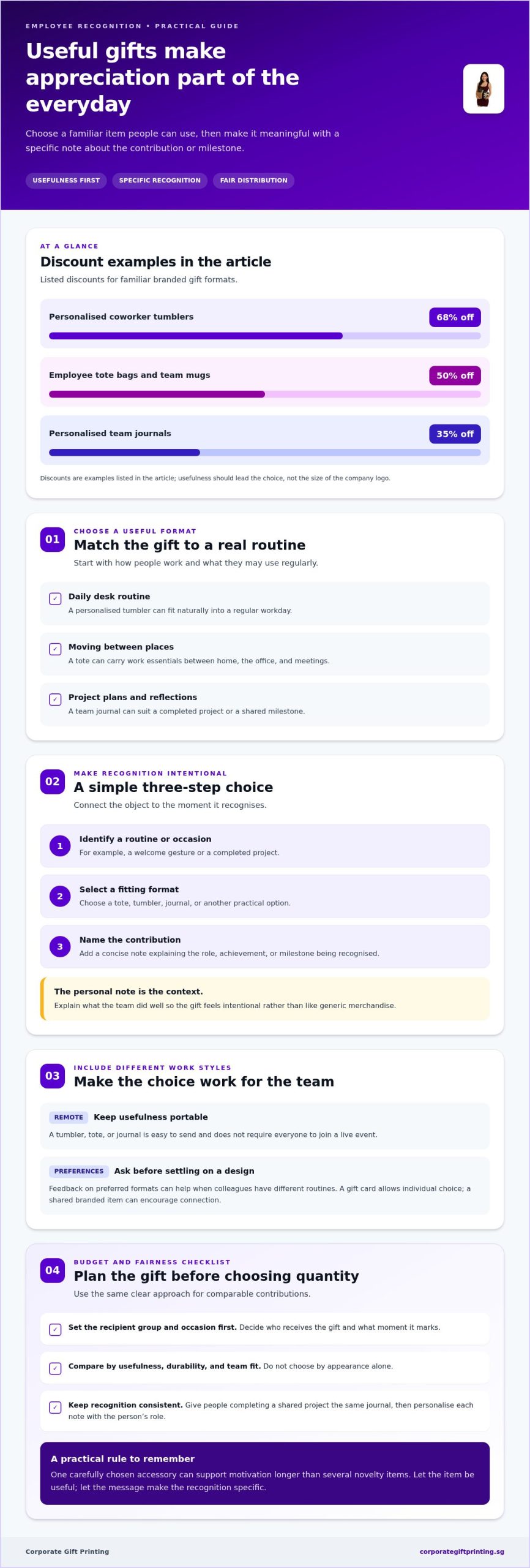
Start with use, not logo size. A personalised coworker tumbler suits a daily desk routine. A tote carries work essentials between home, office, and meetings. Some personalised coworker tumblers are discounted by 68%; employee tote bags and team mugs by 50%. These examples show how familiar formats make appreciation practical. Keep the company mark visible, but let the item’s usefulness lead.
Choose the item through three steps: identify a routine, select a format, then connect it to recognition. For a completed project, a team journal can hold plans and reflections. A personalised team journal has a listed 35% discount. For a welcome gesture, a tote suits employees moving between locations. Add a concise note naming the contribution or milestone. That small detail makes a thoughtful gift feel intentional, rather than like generic merchandise.
Remote teams need the same consideration as office-based colleagues. A useful tumbler, tote, or journal is easy to send and doesn’t require everyone to join a live event. Ask for feedback on preferred formats before settling on a design. If colleagues have different routines, a gift card allows individual choice, while a shared branded item can encourage connection. Match the choice to the team’s working habits, not assumptions about what motivates everyone.
To manage the budget, decide who receives the gift and what occasion it marks before choosing an item or quantity. Then compare options by usefulness, durability, and how well each suits the team. One carefully chosen accessory can support motivation longer than several novelty items. Keep distribution consistent for comparable contributions, so recognition feels fair. For example, give everyone completing a shared project the same journal, then personalise the note with each person’s role. This makes appreciation specific while keeping the gift manageable.
3. Gifts that align with company values
A values-led gift connects a shared goal with what the team accomplished. For example, celebrate teamwork after a demanding project with a personalised note explaining each person’s contribution. That context turns a practical item into a meaningful gesture, because recipients can see why the moment matters. Keep the message specific, respectful, and focused on the actions that made the result possible.
Choose gifts that express values through their purpose, not just a slogan. A sustainability-minded team might appreciate a useful item selected for durability; an inclusion-focused workplace could offer flexible choices that respect different preferences. If philanthropy guides the company, connect recognition to a shared community goal and explain the team’s role. Make the gesture meaningful without implying that everyone must respond or participate in the same way.
For teams in Singapore, distinguish internal gift policy from tax treatment. Set clear rules for eligibility, approval, and consistent distribution, then record each gift’s purpose and recipient. Tax treatment can depend on the gift’s purpose and circumstances, so don’t assume every employee gift receives identical treatment. A finance review can help the company classify the expense appropriately under its processes.
Inclusive choices start with listening. Invite feedback on practical preferences, then select an item or flexible option that doesn’t depend on one dietary, cultural, or personal preference. For a virtual team, a digital choice can make participation easier across locations, while a personalised message still connects the gift to a shared achievement. Explain the recognition moment clearly, so everyone understands the reason behind it.
The main risks are perceived favouritism, a gift that conflicts with stated values, and recognition that feels obligatory. Apply the same criteria to comparable contributions, and avoid presenting a symbolic present as a substitute for fair communication or meaningful support. For example, if teamwork is the value, recognise the whole project group rather than singling out one person without explanation. Invite feedback after the gesture and use it to refine future choices.
For a practical expression of company identity, consider values-aligned electronic corporate gifts that connect recognition with a useful item.
3. What are popular team gifts in Singapore at different price points?
In Singapore, plan team gifting by setting a per-person budget before choosing an item. Then account for the recipient count, personalisation, and how the gift will be distributed. These factors shape the final spend more reliably than choosing an item by appearance alone. For branded items, the price depends on the item, quantity, and customisation, and is provided after a quote request.
For a modest allocation, consider a Christmas card paired with a keychain. The card gives space for a personal message, while the keychain adds a small keepsake. This pairing works for a seasonal thank-you or a team milestone. Keep the message specific: name the shared effort or achievement rather than relying on a generic greeting.
A mid-range approach could use a personalised mini trophy desk award. It gives a visible reminder of a project, service milestone, or team contribution. Make the recognition meaningful by stating what the recipient or group accomplished. For shared results, acknowledge the team’s role so the award doesn’t suggest that success depended on one person alone.
For a larger allocation, choose a more substantial present or combine a practical gift with a handwritten note. Compare options by usefulness, durability, and how naturally they fit the occasion. A premium gesture should still feel appropriate to the achievement; a higher spend cannot replace fair recognition. Before ordering, confirm the recipient list, message, and distribution plan. That final review helps keep gifting consistent across departments and makes each budget tier purposeful.
To compare options fairly, set the same spending approach for equivalent occasions, then adjust the item to suit the purpose. A seasonal token, a desk award, and a more substantial thank-you serve different moments. The strongest choice fits both the team’s budget and the contribution being recognised.
4. What gifts suit a diverse team with different interests and dietary needs?
A flexible choice can respect different tastes without making recognition feel impersonal. Offer a gift card, prepaid card, or eGift so each employee can choose something useful. For example, a remote colleague may prefer a digital option they can enjoy independently, without attending a live event. Pair it with a personal message that explains the achievement being celebrated.
Food gifts need more care. Dietary needs, allergies, religious observances, and personal preferences can make one shared hamper unsuitable for everyone. If you choose food, provide clear ingredient information and a non-food alternative. A reusable desk item, travel accessory, or choice-based reward gives employees another way to take part without explaining private needs publicly.
Curated gift boxes can offer variety, but check that each selection has practical alternatives. A box might combine stationery and a choice of snack, with a non-food option available. Experience-based rewards can work too, provided participation is flexible. Give employees a way to enjoy the reward on their own schedule rather than tying appreciation to one group outing.
Use this simple process before choosing:
- Invite brief, optional feedback about useful formats and preferences.
- Choose a shared gift or a small set of alternatives with similar value.
- Make selection private, especially for dietary or personal requirements.
- Send remote employees a digital choice or a gift that travels easily.
These steps help make gifts to improve team morale inclusive in practice, not just in wording. Apply the same recognition criteria across equivalent contributions, then explain why the team is receiving the gift. A personalised note can connect the gesture to teamwork while letting each person choose what suits them. Avoid making participation compulsory or asking employees to disclose sensitive details to receive appreciation.
Build a thoughtful gifting plan around varied preferences and practical choices. Explore flexible team gift options that can support a more inclusive recognition approach.
Corporate Gift Printing: Customized Bags & Pouches
Corporate Gift Printing helps businesses turn employee recognition into practical, branded presents. Choose Customized Bags & Pouches for everyday essentials, or consider Travel Accessories for colleagues who move between home, work, and client meetings. Electronic Corporate Gifts and Business Stationeries offer other useful formats for marking a team contribution or milestone.
When selecting an item, match its purpose to the recognition moment, then consider how branding and a personal message can make the gesture feel thoughtful. This approach helps create a consistent gift for the team while keeping the reason for appreciation clear.
To discuss branded gifts for your team, contact Corporate Gift Printing.
Make recognition part of how your team works
Let each gift open a longer conversation about how people want to be recognised. After giving a present, notice whether it sparked connection, then use that feedback to shape future moments. This turns gifts to improve team morale into part of a considered recognition practice, rather than a standalone gesture. Keep the focus on genuine appreciation and make room for different ways of contributing.
When you’re ready to put that intention into a branded gift, Corporate Gift Printing offers Customized Bags & Pouches, Electronic Corporate Gifts, and Travel Accessories. The right choice can give your recognition a tangible form while keeping it aligned with your organisation’s identity.
Contact Corporate Gift Printing to discuss a suitable gift for your team. A thoughtful next step can help your appreciation carry forward into everyday work.
Frequently Asked Questions
Do bosses give employees gifts?
Yes, bosses give employees gifts to acknowledge contributions, milestones, or shared achievements. A manager might recognise a colleague who helped onboard a new hire or handled a demanding client request. The gesture works best when it follows clear, fair criteria and includes a brief explanation of what’s being appreciated. That makes the recognition understandable to recipients and colleagues alike.
Are personalized gifts better than generic employee gifts?
Personalised gifts can feel more meaningful when they reflect a recipient’s contribution or interests, but generic gifts may suit shared recognition. For example, a team-wide welcome gift can provide consistency, while a note naming someone’s specific help adds personal context. Consider the occasion, employee preferences, and fairness across the group. Personalisation should make appreciation clearer, not create unequal treatment.
How can companies scale employee appreciation gifting programs?
Build a repeatable process around recognition occasions, approval responsibilities, and recipient records. A shared calendar can flag work anniversaries, project completions, and team milestones; a simple log can track who received what and why. Set a consistent selection approach across departments, then collect feedback after each gifting cycle. For remote employees, plan delivery or digital options alongside office distribution.
What are the best employee appreciation gifts to boost morale?
The best gifts are useful, appropriate to the occasion, and paired with sincere recognition. A desk item can mark a completed project, while a choice-based reward may better suit colleagues with different preferences. Include a short message that identifies the contribution being celebrated. This helps the gift feel connected to the employee’s work rather than an automatic item handed out without context.
What gifts are most effective for improving team morale?
Gifts are most effective when they support a broader culture of appreciation rather than standing alone. Choose an item that fits the team’s routines, explain the achievement behind it, and recognise people according to consistent criteria. For example, a shared project gift can acknowledge collaboration, while a personal note can name each person’s contribution. Keep recognition sincere and respectful.
Compare the final per-person total, including personalisation and distribution, before deciding. For branded gifts, cost depends on the item, order quantity, and customisation; Corporate Gift Printing provides pricing after a quote request. A thoughtful message can add meaning without increasing the gift’s complexity.