The most prominent logo isn’t always the most effective one. A branding treatment that suits a product’s material and purpose can make a more considered impression than a larger mark that feels out of place. It’s understandable to wonder whether colours will reproduce well, fine details will remain clear, or a gift will appeal to its recipient. Successful custom logo printing on products starts with choosing the item and considering how it will be used, then matching the branding to its material, shape and available space.
This practical guide explains how to make those choices. You’ll learn what to consider when pairing branding approaches with different materials, how use and visibility influence the result, and how to set clear expectations for colour, detail and appearance. From customized bags and business stationery to electronic and travel accessories, the right combination can help a corporate gift reflect your company’s identity and feel thoughtfully selected. The aim isn’t simply to put a logo on an item. It’s to create a useful, cohesive brand impression that recipients can appreciate.
Key Takeaways
- Start with the recipient, occasion and intended use to choose a corporate gift that feels relevant.
- Custom logo printing on products works best when the branding approach suits the item’s material and the artwork.
- Compare options by the detail your logo needs, your colour expectations and the impression you want to create.
- Build a clear brief by separating essential brand assets from visual preferences before reviewing the final design.
- Bring product category, material and brand identity together to create a considered corporate gift.
Why custom logo printing on products starts with the gift, not the logo
A logo can be reproduced clearly and still feel out of place if the item doesn’t suit the recipient. Custom logo printing on products means applying a business identity to useful, deliberately selected items, so the gift and the mark work together. The first decision isn’t how large the logo should be. It’s what the recipient is likely to value and use.
A strong branded gift connects usefulness with relevance to the recipient. A thoughtful choice reflects both the recipient’s routines and the relationship your business wants to recognise. A gift selected only to maximise logo visibility may attract attention at first, but relevance gives the item a reason to remain part of someone’s workday or travels.
What makes a branded product feel relevant to its recipient?
Start with the audience and occasion. A gift for business partners may call for a different level of formality from an item for employees. A travel-related occasion naturally points towards travel accessories, while business stationery or an electronic corporate gift may fit easily into a desk-based routine. Treat these as starting points, not assumptions. The recipient’s role, habits and context should guide the final choice.
Usefulness can make a brand presence feel more natural. An item that earns a place in someone’s routine may be noticed over time, even if its logo is understated. Consider whether the gift will be used at work, carried during travel or kept for everyday tasks. That context helps determine what feels appropriate, rather than treating maximum logo size as the only measure of impact.
How does the product shape the branding decision?
The product sets practical boundaries. Material affects how a design can appear; the available surface area influences its scale; and curves, seams, handles or controls can limit where a mark sits. A layout that suits a broad, flat area may not translate neatly to a narrow or shaped surface. The same artwork may need a different placement or treatment on different product categories.
For bags and pouches, consider how the usable surface and construction frame the mark. Electronics may have less uninterrupted space, so a compact identity can feel more balanced. Travel accessories need branding that sits comfortably with the item’s form and purpose. The goal is a clear, considered result, not identical placement on every item.
Printing encompasses a range of history and methods of printing, but the right approach for a corporate gift depends on the product and artwork. Start with the item to give technical choices a clear purpose: express the company’s identity in a way that suits the recipient and the gift’s intended use.
How custom logo printing methods work across different products
Logo treatments differ in how they place a design on an item. Some apply ink to a surface, while others mark or stitch the material itself. Compare them in relation to the product, rather than as an isolated list of methods. Material, shape and usable area all affect which approaches are suitable. Artwork matters too: fine lines, small text and multiple colours have different requirements from a simple, bold mark.
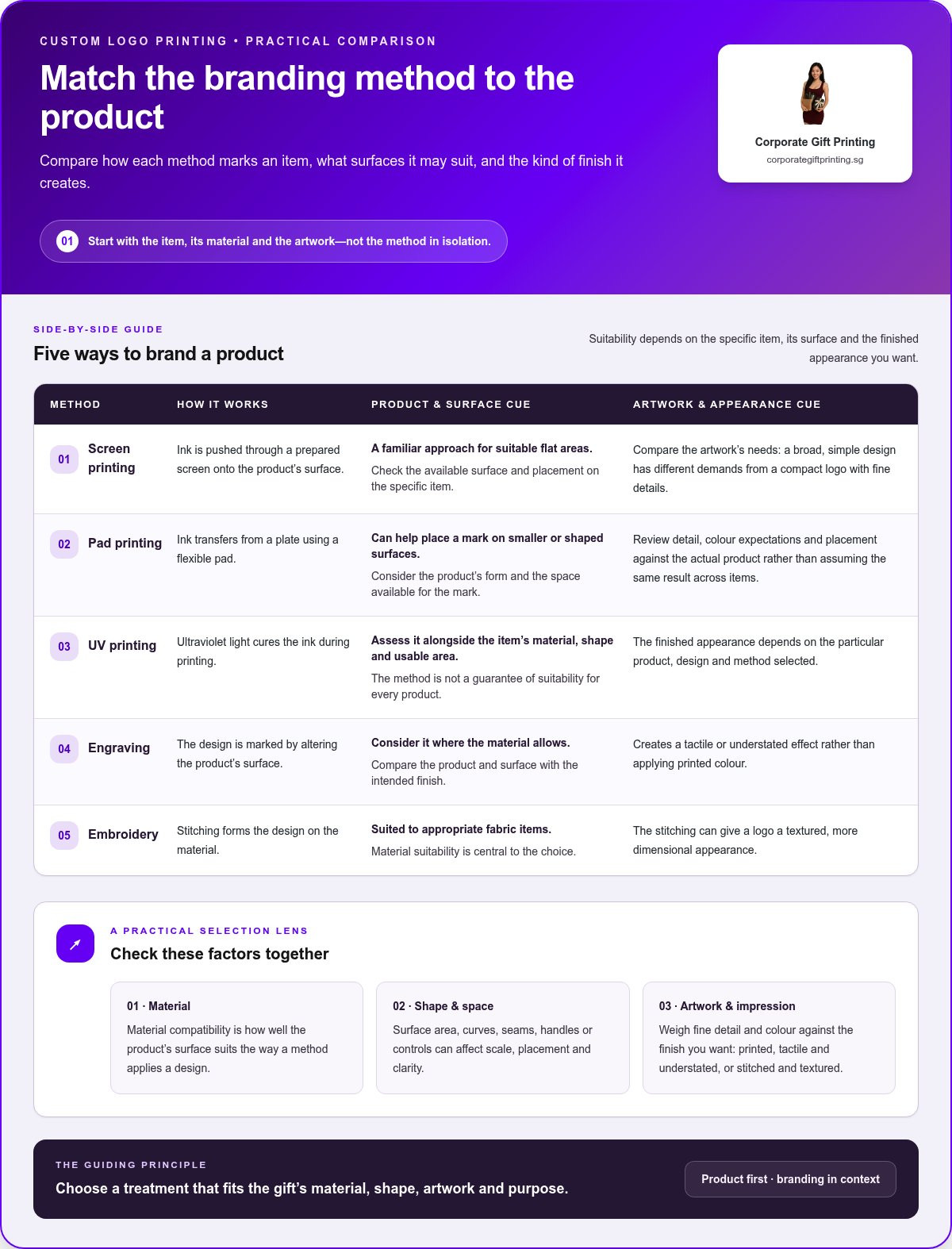
Material compatibility means how well a product’s surface suits the way a branding method applies a design. A method that works well on one surface may create a different appearance on another. Consider each pairing as a practical choice, not a one-size-fits-all formula.
What distinguishes screen, pad and UV printing?
Screen printing pushes ink through a prepared screen onto a surface, making it a familiar approach for applying a design to suitable flat areas. Pad printing transfers ink from a plate using a flexible pad, which can help place a mark on smaller or shaped surfaces. UV printing uses ultraviolet light to cure ink during printing. These are general descriptions, not a guarantee that every method suits every item.
For custom logo printing on products, the useful question is how the artwork will translate onto the specific item. A broad, simple design and a compact logo with fine details have different demands. Product shape and surface also affect placement and appearance, so consider the method alongside the artwork and the impression you want to create.
When do engraving or embroidery suit a product better?
Engraving marks a design by altering the product’s surface, creating a tactile or understated effect rather than applying printed colour. Embroidery forms a design with stitching and suits appropriate fabric items, where its texture can give a logo a more dimensional appearance. Neither approach is interchangeable with printing: the material and desired finish guide the comparison.
Think about what matters most. If colour and fine visual detail are central to the artwork, compare suitable printing approaches. If a tactile mark or stitched effect better fits the product’s character, consider engraving or embroidery where the material allows. The final appearance depends on the item, design and chosen method, so don’t assume one treatment will look identical across different product categories.
A practical brief can describe the product, its material, the logo’s essential details and the impression you want the finished gift to make. This gives the branding decision a clear purpose without assuming every method suits every surface. Corporate Gift Printing sources and customizes corporate gifts with company logos across categories including bags, electronics and travel accessories. Explore corporate gift sourcing and customization to consider how product and branding can work together.
Compare logo-printing options by material, artwork and intended impression
A useful comparison starts with the surface, then considers what the artwork needs to preserve and how the finished gift should feel. The table below is a decision aid, not a guarantee of a specific result. Materials, product construction and artwork can all affect the final appearance. Use it to identify questions for each item rather than assume one method will suit every product.
| Product surface | Design needs | Visual effect |
|---|---|---|
| Suitable fabric on bags or pouches | Assess the fabric and design together. A bold mark may be easier to adapt than fine lettering or intricate shapes; stitching is another consideration for suitable fabric. | Ink-based approaches can present colour, while embroidery adds a raised, textured quality. |
| Flat paper surfaces, such as business stationery | Consider text size, fine lines and contrast against the paper. Keep essential details legible at the finished scale. | A printed mark can integrate with the stationery layout, from a restrained identity to a more visible brand treatment. |
| Smooth or shaped product surfaces | Check the usable area and contours. Compact artwork may be more practical where placement space is limited. | Depending on the surface and suitable method, the mark may appear as printed colour or a more understated surface treatment. |
| Surfaces suitable for engraving | Consider whether the artwork can be simplified for a surface-altering mark, and whether colour is essential to the brand expression. | Engraving can create a tactile, restrained impression rather than a coloured graphic. |
Which artwork details affect the finished logo?
Small text, narrow gaps, fine lines and intricate shapes can lose clarity when reproduced at a reduced size or on a textured surface. Contrast matters too: a logo’s colours may appear different against a light, dark or uneven background, so don’t assume a digital preview will exactly match the finished item.
Review the design at its intended size and in the context of the product, not only enlarged on a screen. Check whether the name remains readable, important shapes stay distinct and the background competes with the logo. For business stationery, consider these details alongside layout and brand consistency, as discussed in this business stationery brand identity and gifting guide.
How should brand impression influence the method?
Subtle branding and a more visible treatment serve different purposes. A restrained mark may suit a formal gift or a brand identity built around discretion; a more prominent logo may suit an item intended to represent the company visibly. Neither is automatically better. Consider the recipient, the gift’s purpose and the level of formality you want to convey.
For a premium gifting context, align the finish with the item’s overall character instead of treating visibility as the sole measure of quality. The 2026 luxury corporate gifts guide offers related considerations. This is the core of custom logo printing on products: choosing a treatment that respects the material, preserves essential artwork and supports the impression your company intends to make.
Prepare your logo and product brief for a smoother custom-printing project
A clear brief connects the gift’s purpose to a considered branding decision. For custom logo printing on products, outline who will receive the item, why you’re giving it and what the finished piece should communicate before settling the artwork details. This keeps practical needs in view and helps your team distinguish brand elements that must remain consistent from preferences that can adapt to the product.
What information belongs in a product-branding brief?
Record the recipient group, gifting occasion and intended brand impression first. Then describe the product category and how recipients are expected to use the item. A gift for business travel has different practical considerations from one intended for desk use. Note the material and shape if known, since both can affect logo placement and how the final design reads.
Separate essentials from options: the approved logo version, wording and key brand colours are core assets; preferred logo size or placement may be adjustable if the item’s surface calls for it. A concise brief might include:
- Audience and occasion: Who is receiving the gift, and what relationship or moment should it recognise?
- Product direction: Which category suits the recipient, and what use should the item serve?
- Brand priorities: Which logo version, colours and elements must remain, and which visual preferences can flex?
- Placement considerations: Note any preferred position, the product’s shape and material, and how recipients are likely to view the mark.
These points give everyone a shared reference. They also make it easier to explain why a practical adjustment, such as simplifying a small logo, may help preserve clarity without changing the core brand identity.
How can teams review artwork before production?
Review the design at its intended size and in context, rather than relying only on a large screen image. Check the correct logo version, spelling, proportions, spacing and visual balance. Consider viewing distance too: wording that looks clear close up may be harder to read on an item typically seen from farther away. Check the artwork against the product’s surface and colours, since contrast affects legibility.
If a proof or visual representation is provided for project review, use it to assess placement and scale alongside the artwork itself. Gather comments from relevant stakeholders in one coordinated round, and have one person consolidate the feedback. This can reduce conflicting revisions and keep the final review focused.
Before approving, compare the design against the brief: are essential brand assets intact, does the placement suit the item, and does the result support the intended impression? A deliberate review helps align the product and logo before the project moves forward.
With the audience, product and artwork priorities organised, you can shape a more coherent corporate gift brief. Explore custom corporate gift solutions for branded gifts across bags, electronics, travel accessories, business stationery and luxury gift categories.
Turn your custom logo printing brief into a considered corporate gift
A strong brief brings the key decisions into focus: who the gift is for, what it should be used for, which product category fits, what the material allows and what impression the branding should leave. These elements work together. A carefully chosen logo treatment can support a gift’s purpose, but it can’t make an unsuitable item feel relevant to its recipient.
That’s the practical value of custom logo printing on products. Rather than treating the logo as a final decoration, consider it alongside the product and the relationship the gift is intended to recognise. The right choice might be customized bags and pouches for a practical gift, business stationery for a professional setting, or travel accessories for recipients who travel. Let the audience and occasion guide the category, then use the brand identity to shape the final expression.
How does a sourcing and customization partner help?
Sourcing and branding come together when the business objective guides product selection and logo customization. Corporate Gift Printing sources and customizes corporate gifts with company logos for business clients, across bags, electronics, travel accessories, business stationery and luxury gifts. These categories give companies options to consider for different recipients and occasions, while keeping the product choice connected to the brand impression they want to make.
A useful planning summary can keep the project grounded in its purpose:
- Audience: Identify who will receive the gift and what matters in their work or routine.
- Occasion: Define why you’re giving it and the tone the gesture should convey.
- Product category: Choose a direction that makes sense for the recipient and intended use.
- Brand impression: Decide whether the identity should feel understated, prominent or somewhere between.
- Artwork priorities: Bring the approved logo assets, key colour preferences and placement priorities, distinguishing essentials from flexible preferences.
What should a business take into its next planning conversation?
Bring a concise brief rather than relying on assumptions. Include the intended recipient group, occasion, preferred product category and the impression you want the gift to create. Add the approved logo version and any must-keep brand elements, then note colour and placement preferences. If the item’s material or shape is already known, include it so those details can inform the discussion.
Keep requirements distinct from preferences. Correct spelling, approved logo proportions and essential brand assets are requirements; a particular placement or scale may be a preference that can be discussed in light of the product. This gives the project a thoughtful starting point without presuming the final appearance before considering the product and artwork together.
With those decisions organised, you’re ready to shape a corporate gift that feels aligned with your company and relevant to its recipient. Discuss a custom corporate gift project and share the audience, occasion, product direction and brand priorities behind your brief.
Make your next corporate gift a meaningful brand moment
A corporate gift can express how your business values a relationship. Give the gesture a clear purpose: recognise a partnership, welcome a colleague or show appreciation. When the item feels intentional, the brand presence becomes part of a thoughtful exchange rather than a mark added as an afterthought.
Use your brief as a shared point of reference. It can help your team make decisions with confidence, keep priorities aligned and give the gift a coherent role in how your company presents itself. The aim of custom logo printing on products isn’t simply to be seen; it’s to create an impression that feels true to your organisation and considerate of the person receiving it.
When you’re ready to shape that idea into a corporate gift project, discuss your custom corporate gift project. A thoughtful starting point can lead to a brand gesture recipients will be glad to keep in mind.
Frequently Asked Questions
Can every logo be printed on every type of product?
No. The product’s material, shape and available branding area can limit which treatments are suitable and how much detail will remain clear. For example, a long company name may be difficult to fit neatly on a compact item. For custom logo printing on products, consider whether a shorter logo variation or standalone symbol can preserve recognition when the full artwork won’t fit comfortably.
What file format should I use for a company logo?
A vector file, such as AI, EPS or PDF, is generally useful because it can be resized without becoming pixelated. If you only have a PNG or JPG, its resolution may affect clarity at the intended print size. Send the original artwork rather than a screenshot or image copied from a document, and include any font or colour references your team uses to maintain brand consistency.
Will the logo look exactly the same on the product as on my screen?
Not necessarily. Screens create colour with light, while a physical product has its own surface and background, so the same artwork can appear different in person. A colour may also seem less vivid against a dark or textured material. For brand-critical shades, review the product representation in context and identify which elements must remain visually distinct, rather than relying on a screen preview alone.
Is embroidery better than printing for a company logo?
Neither is universally better; the choice depends on the fabric, artwork and look you want. Embroidery can add texture to suitable fabric, while printing is often considered when the design relies on colour or fine visual elements. A small wordmark with narrow lettering may need a simplified version if stitched. Compare the logo at the final size and consider whether a raised finish suits the item’s formality.
Can a detailed, multicolour logo be used on small corporate gifts?
Sometimes, but the smallest elements may become difficult to distinguish at reduced scale, and the product’s limited space can affect how the colours read. Before committing to the full logo, inspect a scaled version for legibility. If the fine details crowd together, consider using an approved brand symbol or simplified logo variation for that item, while reserving the complete artwork for larger surfaces.
How do I choose a branded product recipients will actually use?
Start with what recipients already do, not what offers the largest branding area. Consider their work setting, travel habits and the occasion, then select a category that naturally fits those routines. For a mixed audience, think about whether one item will be broadly useful or whether different recipient groups call for different choices. A practical gift with a restrained identity can feel more considered than a highly visible item with little everyday relevance.