A gift budget should make thoughtful gestures easier to repeat, not turn them into an afterthought. Building client relationships through gifting starts with a clear allowance per recipient, simple spending tiers, and a calendar of meaningful moments instead of last-minute decisions. Keep each gift aligned with the relationship, occasion, and overall budget, then apply those principles consistently.
A considered client gift can express appreciation, but the thought behind it matters as much as the item. The challenge is to make that care feel personal while keeping choices practical across clients and occasions. This guide explains how to consider recipients’ preferences, set workable budget tiers, recognize milestones, and make gifting a repeatable part of relationship-building. It also covers ways to assess whether your approach resonates, so each gesture feels purposeful rather than routine.
Key Takeaways
- Match each gift to the recipient’s preferences, your relationship, and the occasion so the gesture feels considered rather than routine.
- Use project completions, anniversaries, referrals, and other meaningful moments to recognize progress at the right time.
- Set clear spending tiers to keep gifting consistent, and consider tax treatment separately from your internal budget.
- Plan gifting as an ongoing relationship practice, then choose branded items that suit how you want clients to remember your business.
1. Choosing gifts suited to client preferences and the business relationship
Start with the recipient, not the logo. A useful travel accessory may suit a client who travels often better than desk stationery. A project lead who takes detailed notes may appreciate business stationery. Consider the client’s role, routine, and known preferences before choosing an item. A thoughtful match shows appreciation without making the gesture feel like a sales tactic.
Use a simple three-step check: identify the occasion, choose an appropriate gift category, then add a personal message. For example, business stationery may suit a client who regularly takes notes, while an electronic gift may fit someone who relies on technology throughout the workday. Avoid guessing at sensitive preferences. A concise note mentioning a completed collaboration or shared achievement can make a practical gift feel personal and valued.
For Singapore compliance, keep gifts transparent and separate from decisions such as tenders, approvals, or referrals. Anti-corruption rules make the gift’s purpose and business context important: a gesture intended to influence a decision can create serious risk. Follow your organisation’s policy and the recipient’s gift rules, and record the occasion and reason. If a client is reviewing a proposal, choose a neutral, low-key way to express appreciation instead.
Gifts can also recognize a team, not only an individual. After a project completion, a set of useful notebooks or coffee mugs can celebrate the group’s contribution. For a team-building event, choose a practical item that participants can use afterward, rather than something tied only to the activity. A short message acknowledging the team’s specific effort helps connect the gift to the achievement and supports trust and loyalty over time.
Match the gesture to the relationship’s stage. A new client may value a welcome note and a useful business item, while a long-term partner may appreciate recognition of a shared milestone. Consistent, considered choices strengthen relationships by showing that the recipient’s preferences matter beyond the transaction.
2. Gifting for project completions, anniversaries, referrals, and milestones
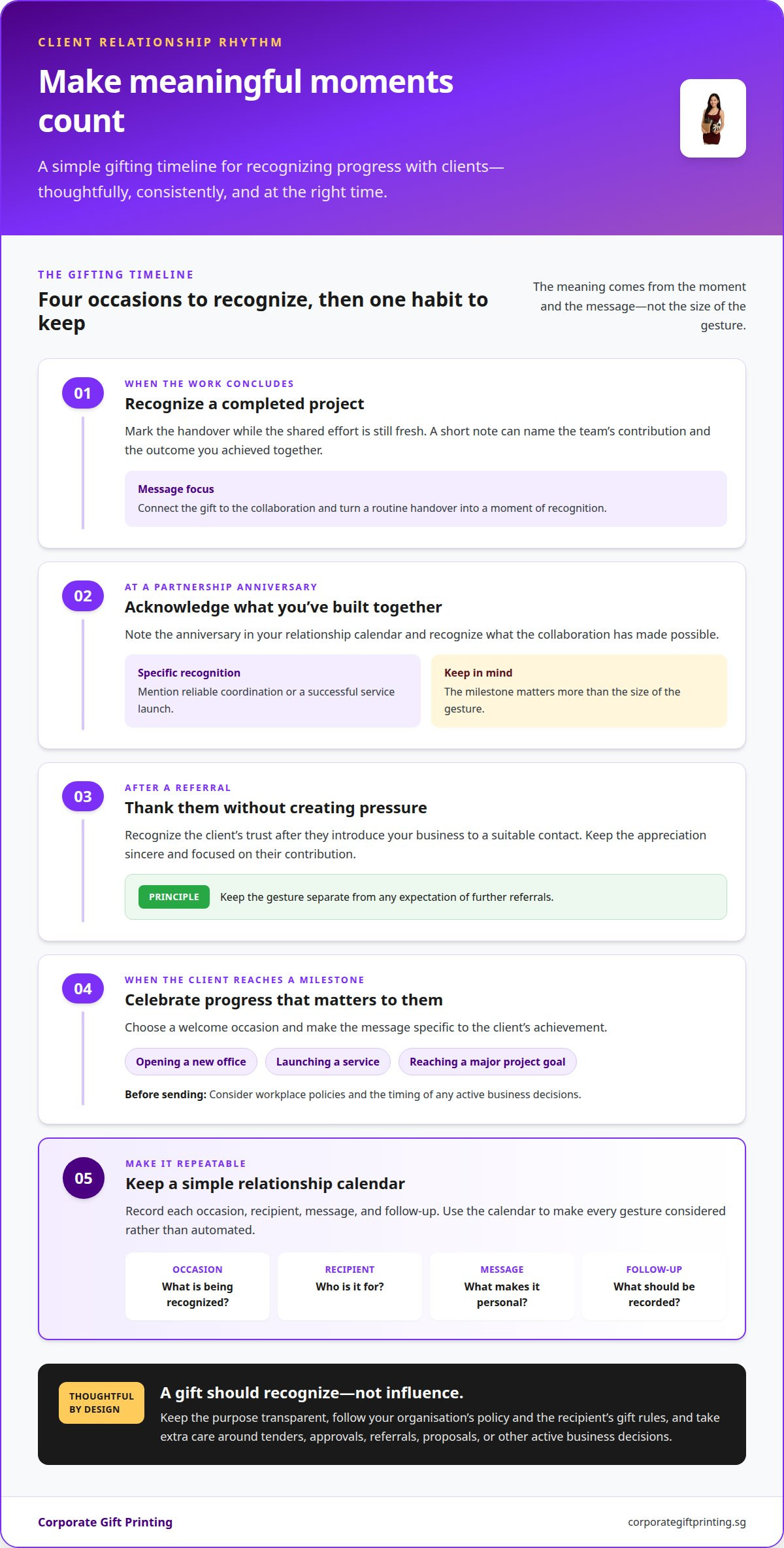
Timing gives a client gift its meaning. Mark a completed project when the work concludes, while the shared effort is still fresh. A short message can name the team’s contribution and the outcome you achieved together. This turns a routine handover into a moment of recognition and reinforces the connection beyond the contract. For project-driven fields like real estate and building, specialists such as Cadeau + Bliss design tailored settlement and handover gifts that celebrate these milestones with lasting impact.
Partnership anniversaries offer another natural opportunity. Note the date in your relationship calendar, then acknowledge what the collaboration has made possible. For example, a message might celebrate reliable coordination or a successful service launch. The milestone matters more than the size of the gesture. Thoughtful gifting at an unexpected but appropriate moment can leave a lasting impression.
Referrals call for sincere appreciation, not pressure. After a client introduces your business to a suitable contact, send a thank-you that recognizes their trust. Keep the gesture separate from any expectation of further referrals. This helps preserve a genuine relationship and keeps recognition focused on the client’s contribution.
For business milestones, celebrate meaningful progress such as opening a new office, launching a service, or reaching a major project goal. In situations where timing is critical or a celebratory gesture is needed quickly, services like same day flower delivery melbourne make it straightforward to send fresh floral gifts that mark the occasion promptly. Choose an occasion the client would welcome, and make the message specific to their achievement. A generic greeting may feel routine; a note naming the milestone shows attention. Before sending, consider the recipient’s workplace policies and the timing of any active business decisions.
Build a simple calendar with project completions, anniversaries, referrals, and client achievements. Record the occasion, recipient, message, and follow-up so each gesture feels considered rather than automated. This practical rhythm makes corporate gifting a consistent way to recognize progress. For a branded option suited to a partnership milestone, explore corporate gift ideas that can carry your appreciation into the client’s working day.
3. Client gift budgets and business tax deductions
Set an annual gifting budget, then divide it into clear tiers for different relationship needs. For example, reserve one tier for milestone recognition and another for routine appreciation. Record each gift’s recipient, occasion, business purpose, and amount. In Singapore, keep this internal spending limit separate from tax treatment. A budget cap alone doesn’t establish that an expense qualifies for a deduction.
Should every client receive the same gift? Keep the policy consistent, but tailor the item to the recipient’s role, preferences, and workplace customs. A shared spending tier can guide choices, while a client who travels may receive a travel accessory and a frequent note-taker may prefer business stationery. For culturally considerate gifting, account for the occasion, dietary preferences, and the recipient’s gift policies.
Physical gifts, gift cards, and experiences serve different purposes. A physical corporate gift, such as business stationery, can carry a personal message; a gift card lets the recipient choose. An experience may create a shared memory, but it should suit the client’s schedule and interests. Choose the format that best fits the relationship and reason for giving.
For sustainable and locally sourced options in Singapore, consider reusable items, locally made stationery, or local artisanal products. Choose based on usefulness and origin, rather than relying on broad environmental claims. A reusable bag, for example, can be practical for a client who regularly carries work materials.
Presentation completes the gesture. Choose neat packaging, add a handwritten note, and connect the message to a specific collaboration or achievement. Customised notebooks or electronic gifts can suit different corporate preferences, while a carefully chosen item can make appreciation memorable. Keep a simple record of the gift and its purpose, then review the budget regularly to support successful, consistent gifting without confusing spending plans with tax deductions.
4. Consistent gifting for client relationships
Consistency means thoughtful recognition throughout a relationship, not simply sending gifts each season. Build a calendar around meaningful business moments, such as project completion, a partnership anniversary, or a client’s new product launch. This keeps gratitude timely and connects each gesture to a real achievement rather than an automatic annual routine.
Keep a simple record for each client with key dates, preferences, past gifts, and follow-up notes. Before sending anything, review it and choose a gesture suited to the moment. A new client milestone may call for a welcome note, while a completed collaboration deserves thanks for the shared work. This prevents repetition and helps each gift feel personal.
A steady approach doesn’t mean giving every client identical items. Keep the process consistent while varying the message and gift to suit the relationship. A client who regularly refers suitable contacts may appreciate specific recognition of that trust. Another may value a note celebrating a successful launch. Make the message about their contribution, not the next business opportunity.
Track responses to understand whether your approach feels relevant. Note direct client feedback, renewed business, referral leads, and engagement after each gift. These signals can guide future choices, but treat them as relationship indicators, not proof that a gift caused a particular outcome. If a gesture receives little response, refine its timing, usefulness, or message rather than simply increasing its scale.
Physical gifts can stand out amid emails and video calls, especially when a handwritten note gives them context. Keep a regular review point to assess upcoming milestones, past gestures, and the client calendar. A consistent programme should feel attentive, not automated. To make branded gifting easier to plan across client moments, explore corporate gift options suited to your relationship goals.
Corporate Gift Printing
Corporate Gift Printing helps businesses turn a client appreciation plan into branded, practical gifts. Once you’ve identified the recipient, occasion, and budget, choose from Customized Bags & Pouches, Electronic Corporate Gifts, Travel Accessories, and Business Stationeries to suit different work styles and relationship milestones.
Share the gift’s purpose, intended recipients, and branding priorities to shape a considered choice. Whether you’re recognizing a completed project or planning consistent client gestures, the right item can carry your message beyond delivery. Corporate Gift Printing sources, customizes, and prints business gifts with company logos, helping align each finished item with your professional identity.
If you’re ready to plan branded gifts for your client relationships, contact Corporate Gift Printing.
Make Appreciation Part of Your Business Identity
Make gifting a considered part of how your business shows up. Choose a guiding principle, such as usefulness, thoughtful branding, or meaningful recognition, and let it inform future choices. This gives your team a clear standard while leaving room to respond to each client relationship with care. Over time, building client relationships through gifting can become less about the object and more about the consideration it represents.
Corporate Gift Printing offers Customized Bags & Pouches, Electronic Corporate Gifts, and Travel Accessories to help businesses put that intention into branded items. Choose an option that reflects your company’s identity and the professional impression you want to leave. A thoughtful, consistent approach can make appreciation feel genuine at every stage of a relationship.
Ready to shape your next client gift into a considered brand gesture? Contact Corporate Gift Printing and take the next step with confidence.
Frequently Asked Questions
How can businesses build client relationships through thoughtful gifting?
Make the gift relevant to the working relationship and easy for the recipient to accept. A disciplined approach to building client relationships through gifting connects the gesture to a shared business purpose, such as recognizing collaboration or welcoming a new partnership. After delivery, note any direct feedback and use it to inform future choices. The aim is genuine appreciation, not an implied obligation.
What are the best corporate gifts for clients in Singapore?
The best choice is useful to the recipient and appropriate for their workplace. In Singapore, consider business stationery for a client who uses printed materials, travel accessories for a frequently travelling contact, or an electronic corporate gift suited to everyday work. Choose based on the recipient’s role and preferences, and keep the message professional. A useful item with clear branding can represent your business without dominating the gesture.
How much should a business spend on client gifts in Singapore?
Set spending according to your organisation’s budget, the number of recipients, the occasion, and the level of customisation. There isn’t one suitable amount for every Singapore business or client relationship. Set an internal limit before selecting gifts, and record each purchase with its business purpose. Keep gift spending records distinct from tax treatment, since an internal budget does not determine whether an expense qualifies for a tax deduction.
When and how often should businesses send gifts to clients?
Send a gift when there’s a genuine reason to recognize the relationship, rather than following a rigid schedule. A new partnership, a client’s product launch, or a significant collaboration can provide a natural moment. Keep a record of recent gestures so clients don’t receive repeated gifts without context. A relevant note or modest recognition at the right time can feel more considered than frequent, automatic deliveries.
How can companies personalise client gifts without seeming intrusive?
Personalise around information the client has shared in a professional context. Refer to a completed initiative, use the recipient’s preferred name, or choose an item that suits their work routine. Avoid assumptions about family, health, religion, or personal interests unless the client has volunteered that information and it’s relevant. Keep the message brief, respectful, and focused on the business relationship, so the attention feels thoughtful rather than overly familiar.
What are the risks of gifting clients, including conflicts of interest and cultural sensitivities?
A gift can create discomfort if it coincides with a tender, negotiation, or approval, or appears intended to influence a decision. Follow your organisation’s gift policy and respect the recipient’s workplace rules. Singapore’s diverse communities also make cultural preferences important: consider dietary restrictions, religious observances, and whether the occasion suits gift-giving. If accepting a gift could place the recipient in an awkward position, choose a simple message of appreciation instead.