A memorable welcome gift doesn’t need to be extravagant; it needs to feel considered. Effective client onboarding gift ideas often start with a small welcome pack of useful items chosen for the client’s context. A personal touch can make the gesture warm without adding clutter.
Choosing a gift is only part of the welcome. The items, branding and presentation should reflect the relationship you want to build, whether you’re welcoming a frequent traveller, a formal business client or a new project partner. This guide explains how to choose a suitable onboarding gift, create a cohesive welcome pack and personalise it thoughtfully. It also covers planning recurring client gifts so each gesture feels relevant rather than routine.
Key Takeaways
- Choose branded gifts that express your company identity while keeping the client’s preferences and professional context in mind.
- A well-planned welcome pack brings useful items together with a personal touch, creating a considered first impression for clients or new starters.
- Use monograms, colours and patterns selectively to make gifts feel personal while keeping the presentation aligned with your brand.
- Plan recurring gifts around meaningful client milestones so each gesture feels timely and intentional, not automatic.
1. What is a good client onboarding gift?
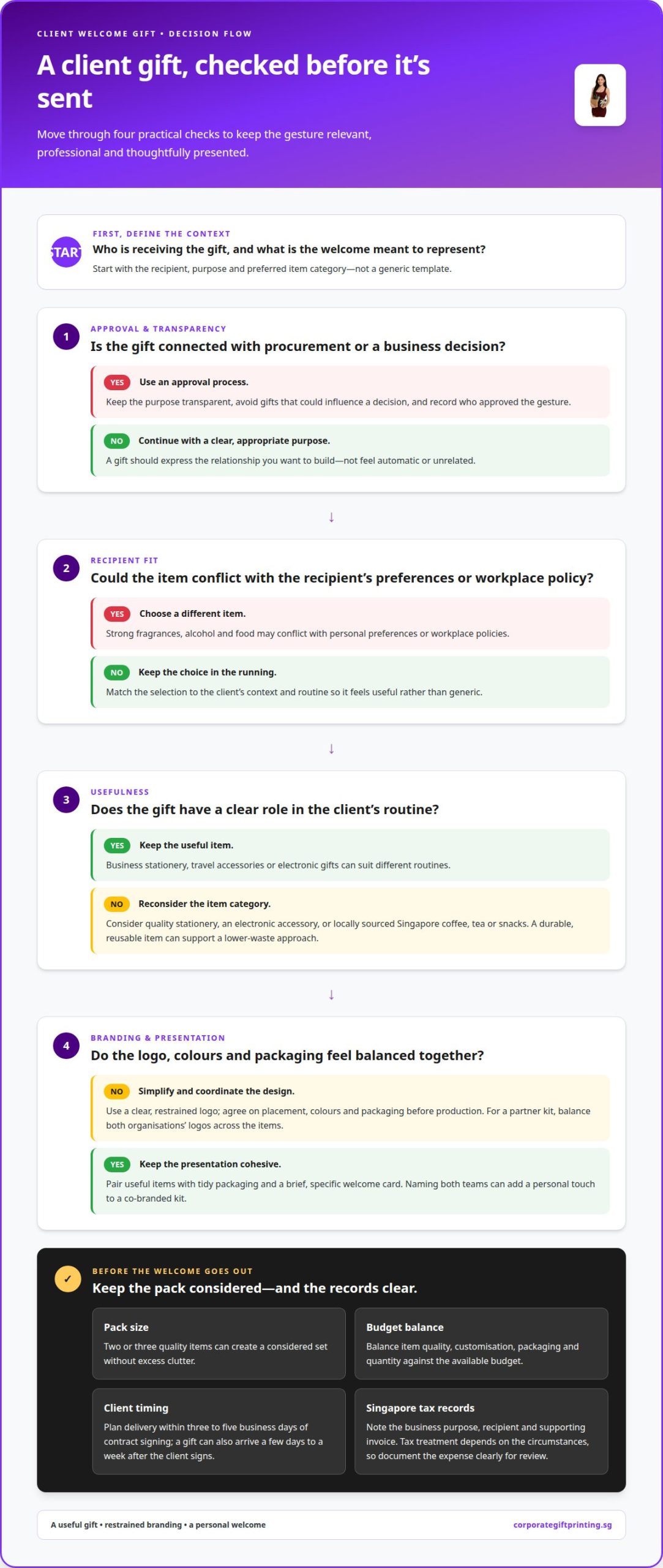
A strong welcome gift expresses your company identity through useful corporate items. Business stationery, travel accessories or electronic gifts can suit different routines. Choose the item first, then position the logo where it supports recognition. A clear, restrained logo keeps the item professional and easy to use.
For partner projects, co-branded kits can represent both organisations. Pair business stationery with an electronic accessory, then balance the logos across the items. Agree on logo placement, colours and packaging before production. A welcome card naming both teams adds a personal touch without crowding the design.
For Singapore tax records, note the gift’s business purpose, recipient and supporting invoice. Tax treatment depends on the circumstances, so document the expense clearly for review. A personalised gift card can include the recipient’s name and a brief message, with value and presentation suited to the relationship.
Yes, client gifts should follow applicable anti-bribery requirements and the recipient’s internal policies. Use an approval process for gifts connected with procurement or business decisions. Keep the purpose transparent, avoid gifts that could influence a decision, and record who approved the gesture.
Locally sourced welcome options can include Singapore coffee, tea, or snacks from local makers. For practical, premium choices, consider quality business stationery or an electronic accessory. A durable, reusable item can support a lower-waste approach; restrained branding and recyclable packaging can reinforce that intention.
Avoid items that feel unrelated to the recipient, have oversized logos or create unnecessary clutter. Strong fragrances, alcohol and food may conflict with personal preferences or workplace policies. A brief, specific note and tidy packaging can make a simple notebook or gift card feel more considered.
In Singapore, Corporate Gift Printing sources and customises corporate gifts with company branding. The process starts with the recipient, purpose and preferred item category, followed by decisions on artwork placement and packaging. This approach suits businesses seeking a cohesive welcome rather than a collection of unrelated promotional products.
2. Welcome packs for new starters and clients
A professional begins with the recipient, welcome moment, and practical purpose. For a new starter, a notebook, pen, and bottle can support the first workday. A client pack may instead centre on items linked to their routine. This keeps the selection useful rather than generic, while giving each item a clear role.
Next, the pack’s components are coordinated. Two or three quality items can create a considered set without excess clutter. A specialist aligns colours, logo placement, and packaging, then checks that the items feel consistent together. For example, a notebook and bottle can share restrained branding, while a welcome card adds a personal message.
Timing shapes the impression. Plan delivery so the client receives the gift within three to five business days of contract signing. A welcome gift can also arrive a few days to a week after the client signs. The first window prioritises promptness; the second leaves room to coordinate the pack and its message.
Budgeting starts with the purpose and recipient, not a fixed template. Balance item quality, customisation, packaging and quantity against the available budget. A compact pack can still feel complete when each item is useful. For a senior recipient, a refined presentation may matter more than adding extra products.
For remote new starters, delivery can make the welcome feel tangible before their first team interaction. For clients, a neat box and a note tied to the project create a more personal introduction. The sender’s message should name the relationship or next step rather than rely on a generic greeting.
Businesses planning a coordinated welcome can explore customised welcome-pack options that bring branded items together. A clear brief covering recipients, purpose, preferred items, and packaging helps shape a cohesive result.
3. Personalisation through monograms, colours, and patterns
Personalisation begins with the recipient and the company’s brand assets. A professional reviews the approved logo, colour palette, and intended use before customising onboarding gifts. For a notebook, that might mean a small logo on the cover and the recipient’s initials inside. This gives the item a personal detail without turning it into a prominent advertisement.
Choose colours that connect the gift to your brand while keeping the design balanced. A printed logo in a primary brand colour can stand out against a neutral item. If your brand uses bold colours, subtle packaging details can carry its visual identity without competing with the gift.
Monograms work best when the recipient’s name is accurate and the placement suits the item. Initials can personalise a travel accessory or premium notebook, while a full name may suit a desk item. The professional aligns the lettering style with the company identity, then checks spelling, scale, and position before production.
A kickoff card can connect the gift to the working relationship. Include the project name, the recipient’s role and a short message welcoming them to the collaboration. For example, “Welcome, Mei. We’re looking forward to launching the regional reporting project together.” A printed card can carry consistent branding, while a handwritten line adds an individual touch.
Personalised welcome notes should mention something specific, not rely on a generic greeting. Refer to an agreed project goal, a recent conversation, or the recipient’s team. Keep the message brief enough to read at a glance. Before the pack is prepared, a professional checks names, logo files, colours, and printed text against the approved details.
A final review helps each element feel connected. A monogram, brand colour and kickoff message should support one another, not compete for attention. For a senior client, discreet initials and restrained packaging may suit the relationship better than prominent logos. The result is a thoughtful welcome that feels personal while remaining recognisably corporate.
4. Planning a recurring client gifting programme
Start with the relationship milestones worth recognising. These might include onboarding, a project launch, renewal or a completed implementation. A gifting calendar connects each gesture to a clear purpose instead of sending items simply because a date has arrived. For a long project, consider a gift at a meaningful midpoint.
Next, group recipients by relevant context. A frequent traveller may appreciate a travel accessory, while a client team that works in offices may value business stationery. Record preferences, delivery details and any gifting restrictions alongside each account. These details help future selections feel considered rather than repeated or generic.
Give each occasion its own brief. Set out the recipient, milestone, message, preferred item category, branding approach and packaging direction. For example, a project-launch gift can mention the project, while a renewal gesture can recognise the partnership’s next phase. Choose a finish that suits the relationship and purpose.
Planning ahead also means coordinating selection and presentation early. Map the programme calendar against approval steps, personalisation and delivery arrangements. This gives each gift time to be prepared and aligns its arrival with the milestone. For multiple client teams, a shared schedule helps maintain consistency without making every pack identical.
Before each delivery, review the recipient record, message, item and destination details. Afterward, record the occasion and response to inform the next selection. If a client’s priorities change, update the gifting plan too. This keeps recurring gestures relevant and prevents the same item from appearing at every milestone.
A structured calendar turns individual gestures into a thoughtful programme. To plan branded gifts around your client milestones, discuss a recurring gifting programme.
Corporate Gift Printing
Corporate Gift Printing helps businesses turn a welcome concept into a cohesive, branded gift programme. The company sources and customises corporate gifts, aligning item selection, logo placement and presentation with the relationship you want to build. Whether you’re preparing one welcome pack or planning gifts for ongoing client milestones, a clear brief can guide the choices.
Options include customised bags and pouches, electronic corporate gifts, travel accessories and business stationery. The right mix depends on the recipient, the gift’s purpose and how prominently you want your brand represented. Share your intended audience, preferred item categories and branding direction to shape a considered result.
For a professional partner on your next client welcome, contact Corporate Gift Printing.
Make your next welcome feel intentional
Choose an upcoming client relationship and define the impression you want the gift to leave. A concise brief can capture the recipient, occasion, message, brand style and practical purpose. It gives everyone involved a shared direction, from selecting the gift to preparing its final presentation.
Make the gesture part of how your team welcomes clients, not an isolated task. A consistent approach to client onboarding gift ideas can help your brand feel thoughtful while leaving room to tailor each welcome to the person and partnership. Start with the relationship you’re building and let that guide the details.
When you’re ready to shape a branded welcome gift, contact Corporate Gift Printing to discuss your brief. A considered first gesture can set a constructive tone for the work ahead.
Frequently Asked Questions
What is a good client onboarding gift?
A good onboarding gift is useful to the recipient and appropriate to your working relationship. For a consultancy client, quality business stationery may suit regular planning meetings; for a technology partner, an electronic accessory may fit their workday. Choose something they can use beyond the first meeting. A short message about the upcoming collaboration makes the welcome feel specific.
What are thoughtful client onboarding gift ideas for different industries and budgets?
Match the item to how the recipient works. A frequent traveller may appreciate a travel accessory, while a client team that takes meeting notes may use business stationery. For technology-focused partners, consider an electronic corporate gift. To manage different budgets, adjust the selection while keeping it relevant. One well-chosen gift can feel more thoughtful than several unrelated products.
How much should a business spend on a client onboarding gift in Singapore?
Set the budget according to the relationship, recipient and purpose of the gesture. In Singapore, include the selected item, customisation, packaging and delivery when planning the total. A modest welcome and a premium executive introduction may call for different levels of presentation. A consistent budget framework across client groups can also keep gifting deliberate and aligned with company policy.
How can I personalise an onboarding gift without making it feel promotional?
Keep the recipient’s experience at the centre. Use a small logo or discreet brand colour, then personalise the note with a genuine reference to the client’s goals or team. For example, mention the next project milestone rather than repeating a company slogan. Choose polished but restrained packaging so the gift feels like a welcome, not an advertisement.