Different clients can receive gifts of different value when the difference follows a clear, consistent rationale rather than favouritism. One of the common corporate gifting mistakes to avoid is assuming fairness always means giving everyone the same item or spending the same amount.
It’s reasonable to tailor a gift to the relationship, occasion, or recipient’s role, but the gesture should still feel thoughtful and appropriate. An extravagant gift can cause discomfort, while a careless one may weaken the message you intend to send.
This guide explains how to set fair gift values, respect recipient company policies, and keep logo printing measured. It also covers practical etiquette, from choosing useful gifts to considering cultural preferences and presentation, so your gesture conveys care and professionalism without creating awkwardness.
Key Takeaways
- Make gifts feel considered by matching them to the recipient, occasion and preferences rather than choosing a generic item.
- Use a clear rationale for different gift values, and choose options that reflect your company’s values, including sustainability priorities.
- Keep logo placement deliberate so the gift feels thoughtful and useful, not like a promotional handout.
- Review recipient organisation gift policies before sending, and plan alternatives for gifts that may not be accepted.
1. What Corporate Gift Etiquette Mistakes Should Companies Avoid?
A generic gift can feel like an afterthought, especially when it has no connection to the recipient or occasion. Start by defining its purpose, such as welcoming a new partner, thanking a client, or recognising an employee milestone. Then choose something the recipient can use rather than a novelty likely to be discarded. In Singapore’s diverse workplaces, consider cultural and religious preferences, dietary needs, and whether the gift suits the occasion.
Custom-branded gifts work best when the item is practical and the logo is a subtle detail. Gift cards offer flexibility when recipients have varied preferences, while useful items such as stationery, tech accessories, or high-quality umbrellas from specialists like theumbrellaman.co.za make a more tangible impression. Choose according to the recipient and purpose, not simply because an option is easy to order.
Group recipients by relationship, role, location, seniority, or work style before choosing gifts. A new employee, a long-standing client, and a project partner, for example, may value different gestures. Apply consistent reasoning within each group so tailored choices feel considered rather than arbitrary. Sending gifts outside crowded holiday periods can also help them stand out. A project milestone or work anniversary offers a meaningful alternative.
Personalisation needn’t mean adding a name to every item. A handwritten note mentioning a specific contribution or shared project can make recognition feel sincere. Pair it with a durable, useful gift and packaging suited to the item. For example, a well-presented notebook may suit a professional milestone better than a disposable promotional trinket.
To avoid gifts that seem impersonal, overly promotional, or low quality, connect the item to the recipient’s needs, limit branding, and consider how it will arrive. An item covered in logos can look like an advertisement, while poor packaging can undermine an otherwise thoughtful choice. Review the item, message, branding, and presentation together before sending. Each detail should communicate appreciation, not a sales pitch.
2. Is It Okay to Give Different Clients Gifts of Different Value?
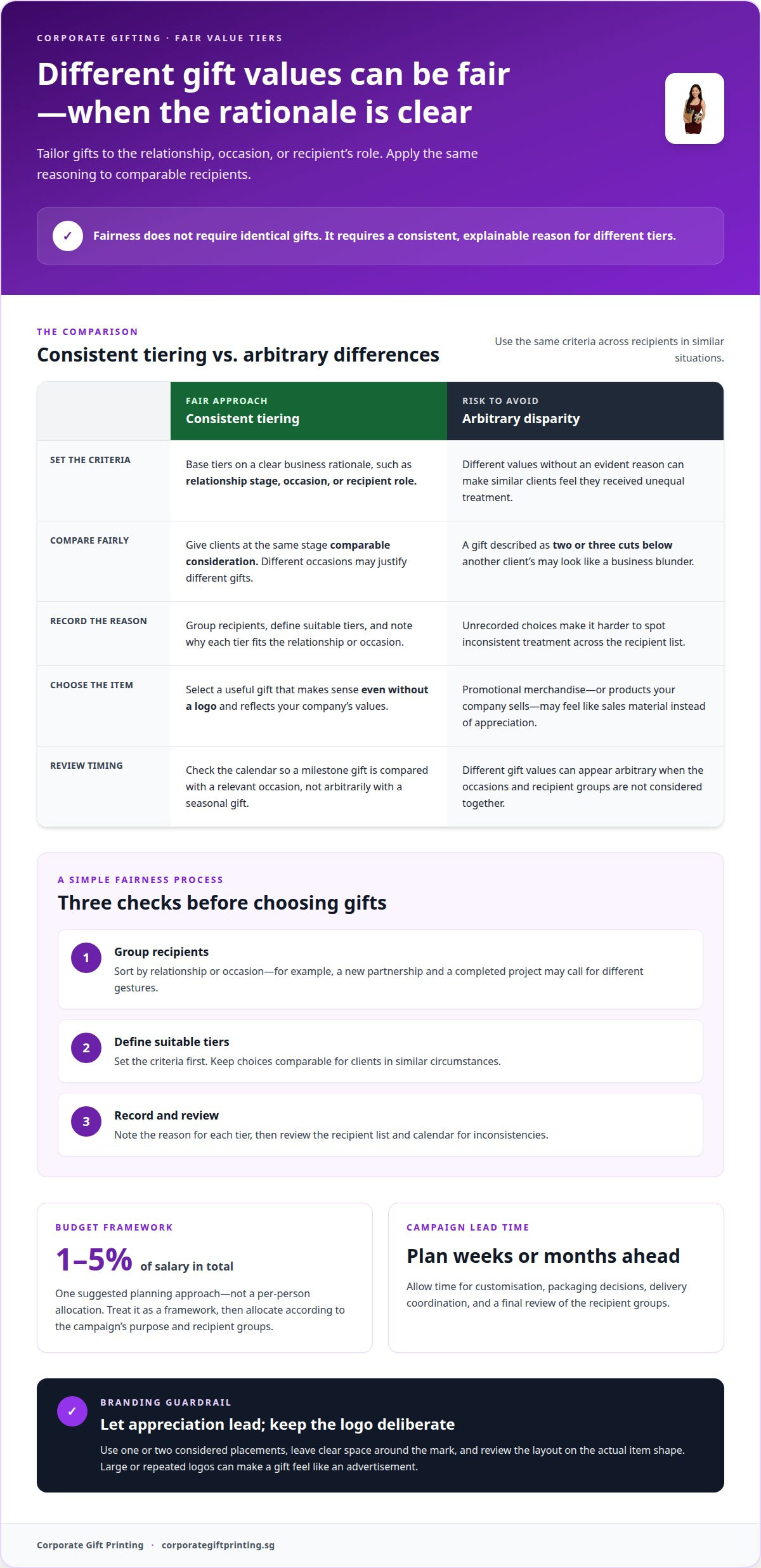
Yes, different gift values can be fair when each tier follows a consistent business rationale. Relationship stage, occasion, and recipient role can guide the choice. A milestone gift for a long-term partner may differ from a welcome gesture for a new contact. The risk arises when similar clients receive visibly unequal treatment without a clear reason. If someone discovers their gift was two or three cuts below another client’s, the difference may look like a business blunder. Set criteria first and apply them consistently.
Use a simple process: group recipients by relationship or occasion, define suitable gift tiers, and record the reason for each tier. Review the calendar before sending so a milestone gift isn’t compared arbitrarily with a holiday gift. Different items may suit a new partnership and a completed project, while clients at the same stage receive comparable consideration. This supports fairness without requiring identical gifts for everyone.
Match the choice to your company’s values. If sustainability is central to your brand, choose a useful, reusable item rather than disposable packaging or a novelty likely to be discarded. A practical item can express those values through its purpose, not just a printed environmental message. Avoid giving branded promotional merchandise or products your company sells, as recipients may see them as sales material rather than appreciation. The item should make sense as a gift even without a logo.
Branding should identify the giver without dominating the recipient’s experience. A discreet logo on a useful item can support a polished impression, while large repeated marks may make it feel like an advertisement. Align colour, presentation, and message with your brand identity, then add a handwritten note that explains the gesture’s purpose. For a considered, brand-aligned gift, explore custom corporate gift options suited to your gifting plan.
3. Keeping corporate gift logo prints moderate in size
A corporate gift should carry your brand without making the recipient feel like a walking advertisement. Keep the logo to one or two deliberate placements, such as a small mark on a notebook cover or bag corner. Leave clear space around it, and make appreciation more prominent than the company name. Experienced custom printers like Printwell Canada suggest reviewing the layout on the actual item shape before production, as a logo that looks restrained on screen may dominate a compact surface.
Presentation matters too. Choose packaging suited to the gift’s quality and occasion, such as a neat, protective box for an executive milestone gift. A crushed carton or excessive wrapping can weaken the impression before the recipient sees the item. Consider how the packaging will travel and arrive, especially when gifts are sent to employees at different addresses. Keep materials practical and make the opening experience feel considered, not elaborate for its own sake.
When clients receive gifts at different tiers, set a clear rationale before choosing items. Relationship stage or occasion may explain a difference, but comparable clients should receive comparable consideration. Record the criteria in the campaign plan, then review the recipient list for inconsistencies. For example, distinguish a project-completion gesture from a general seasonal gift rather than varying values without an evident reason.
Plan campaigns weeks or months ahead to allow time for customisation, packaging decisions, and delivery coordination. Add the occasion, recipient group, artwork approval, and dispatch window to one calendar. Set a budget before choosing gifts; one suggested approach is to allocate 1–5% of salary in total, rather than per person. Treat that as a planning framework, then allocate according to the campaign’s purpose and recipient groups. Advance planning also leaves time to consider cultural preferences and refine a gift’s presentation before sending.
4. Recipient company gift policies and industry compliance
Before sending a corporate gift, follow the recipient organisation’s gift policy. A non-compliant gift may be returned, straining the relationship instead of expressing appreciation. Ask the recipient’s contact about applicable limits or restrictions, and record the response with the approval. In Singapore, companies should also apply their own anti-bribery controls: gifts must not influence business decisions or create an improper obligation. Take extra care with public officials and follow the relevant organisation’s rules before arranging a gift.
For Singapore tax and accounting records, document each gift’s business purpose, recipient, value, and approval. Don’t assume every gift receives the same tax treatment. Keep invoices and delivery records with the entry, then classify the expense under applicable tax rules and company accounting procedures. Clear records help explain why the gift was given and how its cost was handled.
Consider recipient needs before choosing an item. Use known preferences or ask a suitable contact about dietary, religious, accessibility, and sustainability considerations. For example, avoid food when dietary requirements are unknown and choose a practical alternative. Check whether materials or packaging conflict with stated sustainability commitments. This helps the gift show appreciation without overlooking personal or cultural needs.
Set recipient tiers using a consistent rationale, such as relationship stage, occasion, or role. Keep gifts comparable within each group and offer a curated choice where preferences vary. A choice-based approach can make personalisation easier without relying on guesswork. Avoid promotional items recipients cannot use, as they may feel like advertising rather than a considered gesture.
After dispatch, track delivery status and note returned or delayed items. Record recipient feedback and participation, then use those patterns to improve the next campaign. A simple register can include the gift, recipient group, approval, delivery outcome, and comments. For a coordinated gifting plan, plan corporate gifts with a clear recipient focus.
Corporate Gift Printing
Corporate Gift Printing helps businesses turn gifting plans into considered, branded items that support lasting professional relationships. When you’ve defined recipient groups, gift values, and branding preferences, its customised options can help bring those decisions together.
Choose from Customized Bags & Pouches, Electronic Corporate Gifts, Travel Accessories, and Business Stationeries to suit different recipients and occasions. Thoughtful selection and restrained logo placement can help a gift feel useful and aligned with your company’s identity, rather than purely promotional. For a more elevated gesture, Luxury Corporate Gifts may suit appropriate business occasions.
Share your gifting goals, intended recipients, and preferred branding approach with Corporate Gift Printing. Contact Corporate Gift Printing to discuss your corporate gifting needs.
Make your next gifting decision more intentional
A corporate gift can do more than mark an occasion. It can express the kind of professional relationship you want to build, whether you’re welcoming a partner, recognising a team, or strengthening an ongoing connection. Let that intention guide each decision, from the item’s purpose to how your brand appears on it.
Turn the common corporate gifting mistakes to avoid into a short review checklist before approving a campaign. Consider whether the gift suits its recipient and whether the gesture supports the relationship you want to foster. Reviewing common corporate gifting mistakes to avoid can help keep appreciation at the centre of the experience.
Corporate Gift Printing can help bring your gifting direction into a cohesive, customised result. Share the occasion, intended recipients, and brand impression you want to create, then plan your next corporate gifting project. A thoughtful gesture can leave room for your brand while keeping appreciation at its heart.
Frequently Asked Questions
Is It Okay to Give Different Clients Gifts of Different Value?
Yes, if the difference follows a consistent business reason, such as relationship stage or a distinct milestone. A gift marking a completed partnership, for example, may differ from a welcome gesture for a new client. Keep a brief record of the rationale so decisions remain consistent when account managers change. If two clients have comparable relationships and occasions, give them comparable consideration.
Unequal Corporate Gifts to Clients: When Does Tiering Go Too Far?
Tiering goes too far when comparable clients receive noticeably different treatment without a clear, defensible reason. An internal distinction can become awkward if recipients compare gifts at a shared meeting or industry event. Before distribution, review the recipient list by relationship type and occasion. If a tier difference would be uncomfortable to explain plainly, revise the grouping or choose a more consistent option.
What Corporate Gift Etiquette Mistakes Should Companies Avoid?
Avoid gifts that breach recipient policies, create pressure to reciprocate, or appear to buy influence. Don’t send a gift to someone who cannot accept it, even when the intention is appreciation. As a practical safeguard, include a policy-approval step in the campaign record before ordering. Keep the accompanying message professional, specific to the relationship, and free from sales requests.
Why Are Generic Corporate Gifts Still a Common Mistake?
Generic gifts can overlook the recipient’s needs, making the gesture feel like a routine distribution rather than recognition. A standard item can still work if it suits its audience. For example, a travel accessory may be relevant to clients who travel regularly. Connect the choice to a real use or occasion instead of selecting an item simply because it carries a logo.
What are the most common corporate gifting mistakes to avoid?
Frequent missteps include choosing an unsuitable item, overlooking recipient policies, using excessive branding, and applying gift tiers inconsistently. Late planning can also limit suitable choices or disrupt delivery. Prevent these problems with a short approval process: define the purpose, audience, and recipient group, then review the item, message, branding, and delivery details together before committing to the campaign.
How can you choose corporate gifts that suit different recipients and cultures?
Use known preferences and role-based context rather than assumptions about someone’s background. For a mixed group, consider a choice-based format or a useful non-food option, then provide alternatives where accessibility or sustainability matters. A brief preference question can identify restrictions without asking recipients to disclose more than they wish. Keep the message inclusive and avoid cultural symbols unless you understand their meaning.