A logo alone doesn’t make merchandise memorable; the product, colours and placement all shape how it represents your business. For companies in Singapore, branded merchandise for companies means practical items customised with a company’s identity and distributed at little or no cost to promote a brand, corporate identity or event. The strongest choices give people a reason to use the item while keeping the branding clear and appropriate.
Choosing branded merchandise for companies involves more than picking a product from a catalogue. Consider who will receive it, how they will use it, the quantity you need and how the quality fits your budget. A well-placed logo on a suitable item feels considered, while an oversized mark or poor colour contrast can distract from the impression you want to create.
This guide covers product options and the factors that shape cost, quality and order quantities. It also explains how to assess print space, logo placement and brand colours. Whether you’re preparing gifts for clients, partners or employees, use these practical criteria to choose merchandise that is useful, cohesive and true to your brand.
Key Takeaways
- Choose products around how recipients will use them, not just how prominently they can display a logo.
- Compare materials, finish and expected use to judge whether an item’s quality suits its purpose and budget.
- Set quantities by considering your audience and distribution plan, then account for possible extra demand at events.
- Assess logo placement, available print space and colour contrast together so the branding stays clear and cohesive.
- Match the product category to the gesture, whether you’re selecting bags, electronics, travel accessories or business stationery.
Product examples including apparel, mugs, and accessories
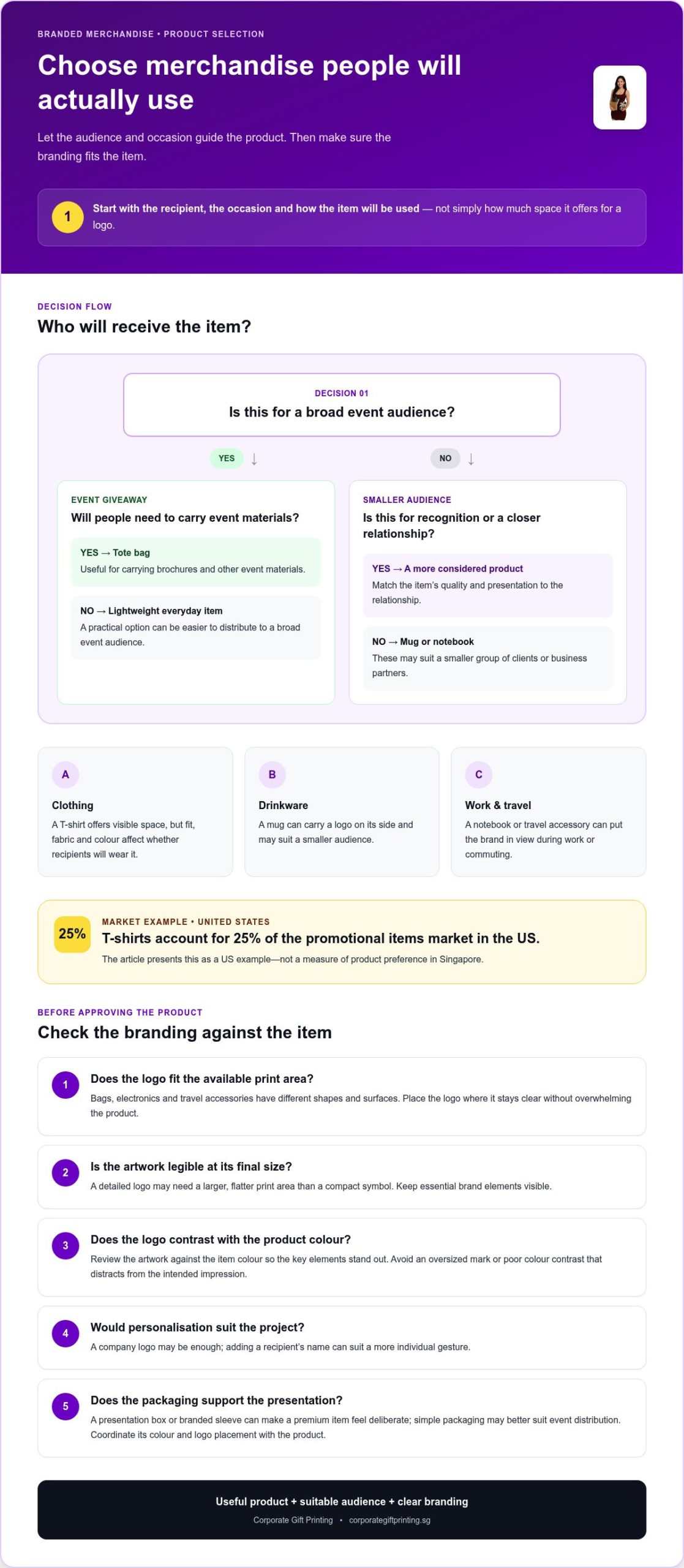
For companies in Singapore, popular branded merchandise options include useful clothing, mugs, stationery and travel accessories. Choose products according to the recipient, the occasion and how the item will be used, then match the branding to its available print area.
Promotional Products for Events
At an exhibition, a useful item can keep a company visible after visitors leave the stand. A tote bag can carry brochures, while a mug or notebook may suit a smaller audience of clients or business partners. Before selecting products, map out how people will receive and carry them, where the logo will appear, and whether the item fits the event’s purpose. A practical giveaway should be easy to distribute and relevant beyond the exhibition day.
Popular Promotional Products
Product preferences differ by audience and market. In the US, T-shirts account for 25% of the promotional items market, making clothing one clear example of a widely used category there. Singapore companies can consider practical options such as drinkware, stationery and travel accessories, choosing based on recipients’ routines rather than assuming one item suits everyone. For recognition gifts, a more considered product may feel appropriate; for a broad event audience, a lightweight everyday item can be easier to distribute.
Clothing, mugs and accessories each offer different branding opportunities. A T-shirt provides visible space, but the garment’s fit, fabric and colour affect whether recipients will wear it. A mug can carry a logo on its side, while a notebook or travel accessory may put the brand in view during work or commuting. Select the item first, then assess how its shape and use support the intended impression.
Personalisation can be as simple as a company logo or can include a recipient’s name when a more individual gesture suits the project. Keep the design legible at its final size. A detailed logo may need a larger, flatter print area than a compact symbol. Review the artwork against the product colour so its key elements stand out.
Custom packaging adds another point of contact before the recipient uses the gift. A presentation box or branded sleeve can make a premium item feel deliberate, while a simple package may better suit event distribution. Align packaging colour, logo placement and message with the product rather than treating each element as a separate design decision.
Begin with a clear brief: identify the audience, occasion, product and essential brand elements. Prepare the logo artwork and decide which details must remain visible. This helps prevent crowded layouts on smaller accessories and keeps personalisation consistent across a coordinated product selection.
What is branded merchandise?
Branded merchandise is an item customised with a company’s identity and distributed to promote its brand, corporate identity or event. For Singapore businesses, branded merchandise for companies can turn practical products into useful reminders of the organisation behind them.
Businesses can source custom corporate merchandise from suppliers that handle product selection, branding and delivery. Compare catalogues by product category and customisation options, then choose items suited to your audience and purpose. A focused selection makes it easier to align the product with the message you want recipients to remember.
For sustainability, consider products carrying specific material claims, such as 100% organic cotton or 60% recycled polyester. Compare the stated material content and intended use with your organisation’s priorities. For example, a reusable bag may suit a recipient who regularly carries work materials, while another product may better fit their routine.
To plan an order, define the audience and occasion, select products and quantities, and specify the branding and delivery requirements. Request a quote to review these details before confirming the order. A clear brief keeps branded merchandise for companies aligned with the audience, visual identity and practical requirements.
Custom Merchandise with a Logo
Start with the product, then adapt the logo to its available print area. Bags, electronics and travel accessories have different shapes and surfaces, so the same artwork may need adjustments. Keep essential brand elements clear at the final size, and review the contrast between the logo and product colour before approving the design.
Brand Recognition and Customer Loyalty
A useful gift can bring a brand into someone’s everyday routine. A notebook used at work or a travel accessory taken on a trip creates opportunities to see the logo. For customer loyalty or employee recognition, match the item’s quality and presentation to the relationship. A considered product feels more personal than a generic giveaway.
Custom Bags and Technology Accessories
Custom bags and pouches can carry work essentials, event materials or personal items, making their print area and intended use important considerations. Electronics and travel accessories may suit recipients who use them regularly. Choose an item that fits the occasion, then consider its size, surface and logo position. These details keep the branding clear without overwhelming the product.
Custom print, packaging and display work together to shape the unboxing and presentation. A branded sleeve can complement a premium gift, while a display arrangement can make event giveaways easy to browse. Use a catalogue to compare product formats, then coordinate packaging colours and logo placement with the item.
Considering audience, cost, quality, and order quantity
Start with the recipients and purpose, then weigh product quality, quantity and project cost. An exhibition giveaway needs a different approach from an employee recognition gift. Effective branded merchandise for companies begins with the people receiving it and the impression the gift should leave.
Audience and Product Quality
Match each item to its recipients. A bag may suit a team event, while business stationery could work well for employees. Review a sample for material, finish, logo clarity, colour and packaging. Compare it with the intended product and artwork so it provides a useful standard for the final order.
Examine a sample closely before production. Check logo alignment, seams or joins, and moving parts. For a bottle, inspect the lid fit and finish; for a bag, look at its stitching and handles. Record any required adjustments, such as improved colour contrast or a different logo size. Low-quality or counterfeit merchandise can damage brand trust if it feels flimsy, differs from the approved sample or misrepresents your organisation.
Set quantities using your distribution plan. For event giveaways, businesses are advised to order 15-20% more items than they expect to need, allowing for additional visitors. For employee recognition, count the intended recipients and consider planned new joiners. Branded merchandise for companies should suit the audience and avoid both shortages and unnecessary leftover stock.
Costs and Bulk Pricing
The total cost depends on product choice, quantity, branding, packaging and delivery requirements. A larger order can affect the per-item cost, while premium items or detailed personalisation can influence the overall budget. Compare the complete customised order, not just the base product. Corporate Gift Printing offers competitive pricing and cost-effective options for business gifting.
A quote request doesn’t place an order. It allows you to review product selection, quantity, branding and delivery requirements before confirming. Product stock and delivery are confirmed with the quote. Timing depends on the product, quantity, branding and delivery requirements, so include your event date or distribution schedule in the project plan.
For group orders, a company storefront can organise choices across teams or locations. A shareable link can help recipients submit preferences, such as shirt sizes, while the organiser tracks selections. Keep the catalogue focused, perhaps offering a classic option and a premium alternative. For branded merchandise for companies distributed as a group order, confirm the consolidated quantities and delivery plan before approving the final order.
For smaller runs, the 15 oz. Brew Ceramic Mug can be ordered in quantities as low as 24.
Use these combinations as reference points when comparing products with your planned distribution and budget.
Branded apparel, accessories and corporate gifts
Choose apparel, drinkware and accessories according to who will use them and where the logo will appear. A staff uniform, exhibition T-shirt and client gift each serve a different purpose.
In Singapore, corporate gifts should follow the giver’s and recipient’s gift-acceptance, procurement and conflict-of-interest policies. For public-sector recipients or regulated roles, follow the relevant organisation’s stricter controls before selecting or distributing gifts.
Apparel and Drinkware
Branded clothing can create a consistent appearance for employees at a company event, trade show or customer-facing workplace. More than 30% of the promotional products category consists of wearable items. For uniforms and workwear, prioritise comfort, fit and fabric suitability for the role, then place the logo where it remains visible during normal work.
Travel accessories and electronics offer practical options for everyday use. A luggage tag or travel pouch can suit employees, clients or event attendees, depending on the occasion. Review the logo against the item’s colour and surface, and consider whether it will remain legible during use. Pairing complementary products can create a unified gift set without making every item identical.
For staff apparel, organise sizes by role or team and keep the design consistent across garments. A small chest logo may suit everyday workwear, while a larger back print can help identify staff at an exhibition. For drinkware, choose a placement that recipients can see while the item sits on a desk. These practical details support visibility without crowding the product.
Accessories and Corporate Gifts
Travel accessories and electronic gifts can suit employees, clients or business partners, depending on the occasion. Choose them for the recipient’s likely use, then align the finish and presentation with the relationship. A travel accessory may suit a team that travels for work, while a refined gift can mark a significant business milestone.
Singapore companies should consider the context of giving. A modest event giveaway differs from a personal gift offered during procurement discussions. Review the recipient’s organisational policies, the purpose of the gift and any approval process before distribution. Clear internal guidance helps employees make consistent choices and reduces the risk of gifts appearing to influence a business decision.
Build a coordinated gift by pairing an accessory with another practical item in complementary colours. For example, a travel pouch and luggage tag can share the same logo treatment without competing for attention. Keep the mark consistent, but adapt its size to each product’s surface. This creates a cohesive presentation while allowing every item to remain useful.
Before finalising a uniform or gift selection, compare the intended use, branding and presentation side by side. Check apparel fit and logo visibility, then assess whether drinkware or accessories complement the audience and occasion. These choices help turn corporate gifts into a considered expression of the company’s identity.
Logo placement, print space, and brand colours
A clear logo depends on the product’s shape, surface and available print area. Choose the branding approach and colours together, then review how the finished item will look in everyday use.
Logo Placement and Print Space
Start by identifying the product’s most visible, usable surface. A flat bag panel offers a different print area from a shaped electronic accessory, while seams or zips may limit placement on a travel item. Keep the logo clear of edges and functional details. Check the artwork at its intended size, since fine lines and small lettering can lose definition on compact items.
Before approving production, compare a digital mock-up with the physical product. Check logo scale, alignment and contrast from the angle recipients will see most often. A centred mark can suit a notebook cover, while a smaller logo may look more balanced on a bag pocket. On a bottle, consider how the logo appears when someone holds it. This practical review helps keep branding visible without overwhelming the product.
Brand Colours and Decoration Methods
Match promotional items to the brand palette, intended audience and available print space. Custom printing can reproduce coloured artwork on suitable surfaces; embroidery creates a stitched finish on fabric, while engraving marks a design into compatible materials. Compare the product material and logo details first. A fine, multicolour mark may suit printing, while a simpler design can translate more cleanly to stitching or engraving.
Colour contrast matters as much as colour matching. A dark logo can disappear against a dark product, and a complex design may become difficult to read when reduced. Use a product-colour and artwork review before final approval. For a coordinated selection, apply the same core palette across notebooks, apparel and travel items, adapting logo size to each surface rather than forcing identical placement.
Material claims should also shape the design choice. If selecting merchandise described as 100% organic cotton or 60% recycled polyester, ensure the product’s stated material claim fits your sustainability messaging. Avoid adding environmental wording to printed packaging unless it accurately reflects the item. This keeps the visual identity and product information consistent.
Use this quick review before confirming artwork:
- Match logo position to the item’s shape and most visible surface.
- Check legibility, colour contrast and fine detail at final size.
- Choose printing, embroidery or engraving according to material and design.
- Align packaging colours with the product and approved brand palette.
For branded travel accessories or electronic gifts, consider how each product’s surface affects logo visibility and decoration. Explore custom corporate gift options to shape a coordinated merchandise selection around your brand identity.
Corporate Gift Printing: Customized Bags & Pouches
Corporate Gift Printing helps businesses create branded gifts for clients, partners and employees. Its Bags & Pouches can suit event materials, everyday work essentials or a considered client gift, with product choice and logo placement matched to your audience.
For a broader gift selection, consider Electronic Corporate Gifts, Travel Accessories or Business Stationeries. Choose the category according to how recipients will use the item and the impression you want it to make. A coordinated selection can bring the product, branding and purpose together without making the gift feel impersonal.
If you’re planning branded merchandise for your organisation, contact Corporate Gift Printing to discuss your project.
Make Your Next Gift Feel Deliberate
The next step is to turn your brand priorities into a clear merchandise brief. Decide what you want recipients to feel, which parts of your identity matter most, and how the item will fit into their day. For branded merchandise for companies, that direction helps keep product, presentation and personalisation aligned rather than treating each as a separate decision.
Corporate Gift Printing can bring your brief to life with Bags & Pouches, Electronics and Travel Accessories. These options can suit different audiences and occasions, from a practical welcome gift to a considered gesture for a business relationship. Share the purpose and intended recipients to shape a selection that reflects your organisation with care.
Discuss your corporate gift requirements and take the next step towards merchandise that feels purposeful and recognisably yours.
Frequently Asked Questions
How much does branded merchandise cost in Singapore?
The total cost of branded merchandise in Singapore depends on the product, quantity, branding, packaging and delivery requirements. Set a workable budget by deciding how much you can allocate per recipient, then compare options that serve the same purpose. Request a quote to review the selected items and project details before placing an order, and refine the selection to fit your budget.
How do companies choose effective branded merchandise for employees and clients?
Choose an item that suits the recipient’s relationship with your business and has a clear use after it is given. For new employees, a practical welcome gift can support a shared sense of belonging; for a client meeting, a more refined item may better suit the occasion. Consider storage, distribution and whether the product works for different roles or preferences. These details help make the gift thoughtful and useful.