The most sustainable giveaway isn’t necessarily the one with the most impressive-sounding material label. A recycled-material tote that suits your audience and gets used may make a stronger campaign choice than an item whose recycled-content claim is hard to understand. Choosing recycled material promotional products means looking beyond the label to the item’s purpose and the evidence behind its materials.
It’s reasonable to want a gift that reflects your environmental priorities without compromising usefulness, presentation or brand fit. Yet terms such as “recycled” can refer to different materials and sources, including post-consumer waste or manufacturing scrap. A broad claim may not explain which components contain recycled content.
This guide compares common recycled materials and their practical trade-offs, then offers a consistent way to assess evidence, everyday usefulness and campaign suitability. You’ll also learn what details to include in a materials brief so product sourcing and professional logo printing align with your audience, brand identity and the information accompanying the claim. The aim is a considered choice you can explain with confidence.
Key Takeaways
- Understand how recycled PET, recycled paper, recycled cotton and recycled aluminium differ, and where each may be used.
- Assess recycled material promotional products against your recipients, occasion, intended use, brand fit and the evidence behind material claims.
- Separate campaign must-haves from preferences before comparing product categories, so your shortlist reflects what matters most.
- Build a practical brief that covers recipient group, occasion, intended use, quantity, material evidence and branding requirements.
- A clear materials brief helps connect custom sourcing and professional logo printing with your campaign purpose and brand identity.
Recycled Material Promotional Products: What Buyers Should Understand First
A material label is a useful starting point, but it can’t tell you everything about a gift’s suitability or environmental impact. Recycled-material promotional products are branded items made wholly or partly from material recovered from waste and used again as a resource. That definition describes a material attribute, not a guarantee that the item has a lower total impact than an alternative.
Keep related claims distinct. Recycled describes the material’s previous use or origin. Reusable describes how an item is intended to be used; renewable refers to a resource that can be replenished; and biodegradable describes material that can break down under particular conditions. Terms such as “eco” or “green” are broader descriptions, not proof that a product contains recycled material. A product may have one of these attributes without having the others.
That distinction matters when comparing recycled material promotional products for a campaign. A bag, notebook or travel accessory may suit recipients’ routines, but the category or appearance alone doesn’t establish its material content. A helpful overview of recycling explains the broader concept and processes. For a purchasing decision, focus on the specific claim made about the item you’re considering.
What recycled content means on a promotional product
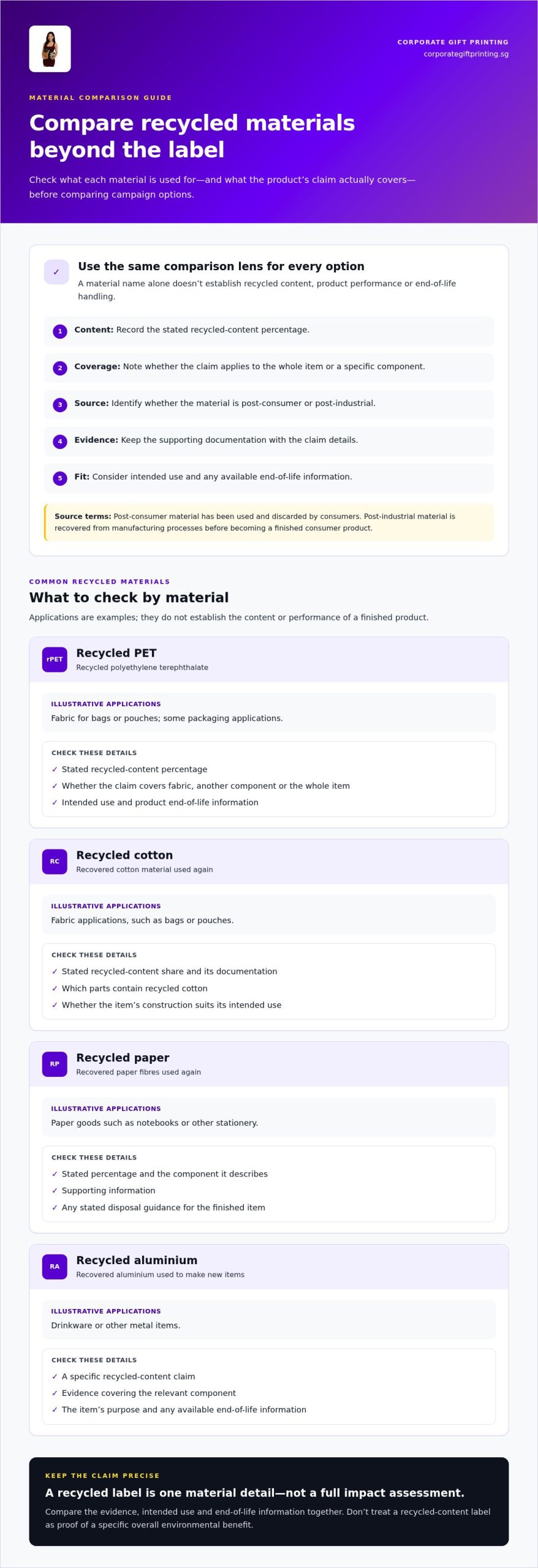
Recycled content can come from post-consumer or post-industrial material. Post-consumer material has been used and discarded by consumers, while post-industrial material is recovered from manufacturing processes before becoming a finished consumer product. Both may be described as recycled, so record the source rather than assume it.
The claim may apply to the entire item or only to a component, such as its fabric, outer shell or packaging. Record the stated percentage, the part it refers to, whether the content is post-consumer or post-industrial, and the supporting documentation. This creates a clear reference for comparing options and helps keep campaign descriptions precise.
Why material labels alone don’t settle the choice
A recycled-content statement describes one feature. It isn’t a complete lifecycle assessment, which would consider multiple stages such as material sourcing, manufacture, transport, use and end-of-life handling. Without comparable evidence across those stages, don’t treat a recycled label as proof of a specific overall environmental benefit.
Consider the recipient and the item’s likely use. Will it serve a genuine need? Is it designed for the way the recipient is likely to use it? What disposal options are available when it reaches the end of its useful life? These questions add context without assuming that any one material or product is automatically the better choice.
Usefulness also shapes brand presentation. An item that fits its audience and campaign may remain in use and keep the brand visible, while a poor fit may go unused. That possibility isn’t a measured environmental outcome, but it is a practical reason to weigh purpose, expected durability and material evidence together. A strong brief gives each consideration a clear place.
Common Recycled Materials: Compare What Each Can Tell You
The material name can help narrow a shortlist, but it doesn’t establish how much recycled content an item contains or whether it suits your campaign. Compare each option using the same details: stated content percentage, which components it covers, supporting documentation, intended use and end-of-life information. The examples below show common applications.
Recycled PET, cotton, paper and aluminium in brief
Recycled PET, often shortened to rPET, is recycled polyethylene terephthalate. It’s commonly discussed in connection with fabric and packaging. Recycled cotton comes from recovered cotton material; recycled paper uses recovered paper fibres; and recycled aluminium is made using recovered aluminium. These material descriptions alone don’t establish how a finished product performs or what happens to it after use.
| Material | Illustrative applications | What to compare |
|---|---|---|
| Recycled PET | Fabric for bags or pouches, and some packaging applications. | Record the stated percentage and whether it applies to the fabric, another component or the whole item. Consider the intended use and the product’s end-of-life information. |
| Recycled cotton | Fabric applications, such as bags or pouches. | Note the stated recycled-content share and its documentation. Check which parts contain recycled cotton and whether the item’s construction suits its intended use. |
| Recycled paper | Paper goods such as notebooks or other stationery. | Capture the percentage and the component it describes, then review supporting information and any stated disposal guidance for the finished item. |
| Recycled aluminium | Examples may include drinkware or other metal items. | Look for a specific content claim and evidence covering the relevant component. Consider the item’s purpose and any available end-of-life information. |
Which material information belongs in a fair comparison?
Use a consistent record for every candidate. The EPA Recycling Basics describes recycling as a process that includes collecting and manufacturing materials into new products. For a specific gift, prioritize documentation about the actual product rather than broad descriptions of a supplier’s range.
- Content: Write down the stated percentage and whether it refers to the full item or only named components.
- Evidence: Keep product documentation that supports the claim. Record a standard or certification only when the documentation identifies it for that product.
- Fit: Compare the item’s expected use, construction and end-of-life information against campaign needs.
Material properties and claims can vary with product construction, so don’t infer specific performance or environmental benefits from a material name alone. A clear sourcing brief can bring these comparisons together with customization and logo presentation. For corporate gifting, custom branded gifts can be tailored to the audience, item purpose and material priorities you set.
How to Compare Recycled Promotional Products for Your Campaign
A campaign-ready choice balances more than a material claim. Start with the people receiving the gift, the occasion and the way they’re likely to use it. Then assess brand fit, logo presentation and the quality of product-specific evidence. This keeps an appealing sustainability label from outweighing practical considerations that affect whether the gift feels relevant and well chosen.
Match the item to the recipient and occasion
Define the recipient group and campaign purpose before comparing categories. A bag or pouch may suit an audience that needs a way to carry everyday essentials; electronics may be relevant when the gift should support work routines; travel accessories may fit a travel-focused occasion. For stationery, consider whether recipients are likely to use it. This business stationery gifting guide offers ideas for aligning the choice with brand identity.
Separate must-haves from preferences before reviewing options. A must-have might be a documented recycled-content claim or a format suitable for the recipient group. Preferences could include a particular look or style of branding. This distinction keeps a shortlist focused: an attractive option that misses a core campaign requirement shouldn’t move forward just because its label sounds appealing.
Assess branding, finish and evidence together
A product’s branding is part of the overall presentation, not an afterthought. Consider where the logo can appear, whether it will be legible at the intended size and how it will sit alongside the item’s material and finish. Compare those details with the product-specific material statement and supporting documentation. A NIST overview of recycling discusses the role of both users and manufacturers in recycling, providing broader context for considering material claims alongside real-world product choices.
Use a simple scoring matrix to compare shortlisted products. Rate each category from 1 to 5, where 1 means a weak fit and 5 means a strong fit. Score only after setting your non-negotiable requirements; a high total shouldn’t compensate for missing evidence or a poor audience fit.
- Audience and occasion: Does the item suit the recipients and campaign context?
- Everyday usefulness: Is there a clear reason recipients might use it?
- Brand fit: Does its appearance support the impression your organisation wants to make?
- Logo presentation: Is the placement clear and appropriate for the item’s finish?
- Evidence quality: Does the product documentation support the stated recycled-content claim?
Keep brief notes beside each score, including any unanswered questions about the product’s intended use or documentation. The goal isn’t to find a universal winner. It’s to select recycled material promotional products that meet your campaign’s essential requirements, make sense for recipients and present your brand with care.
A Practical Checklist for Briefing Recycled Material Gifts
A clear brief gives product sourcing and customization a practical direction. It also helps keep material claims, recipient needs and logo presentation aligned, so the final choice reflects the campaign rather than a label alone. Use this sequence to turn your requirements into a focused request for recycled material promotional products.
Prepare a clear product and branding brief
Start with the campaign purpose, then describe who will receive the gift and how they might use it. State any preferred product category, such as bags, electronics, travel accessories or stationery, and separate essential requirements from preferences. A defined brief lets the product choice and professional logo printing support the same audience and brand impression.
- Set the campaign goal. Explain what the gift should help achieve, such as welcoming new clients, recognising employees or supporting a business event. Include the occasion and intended impression.
- Describe recipients and use. Identify the recipient group and the item’s intended function. A gift meant for everyday work may call for different qualities from one intended for travel or a formal presentation.
- State quantity and product preferences. Include the quantity required and your preferred category. Note must-have requirements, then list optional preferences separately so they don’t obscure the essentials.
- Specify material information. Request a product-specific material description, the stated recycled-content percentage and the parts of the item it covers. Ask for supporting product information and any named standard or certification cited in the claim.
- Define customization needs. Provide the approved logo artwork, brand guidelines, preferred placement and presentation priorities. If the logo’s visibility or a particular impression matters, state that clearly in the brief.
- Review before approval. Compare the proposed item and material information with the campaign requirements, then review the logo proof for clarity, placement and brand consistency.
Review claims and final artwork before approval
Keep environmental wording tied to the evidence available for the specific item. If documentation describes recycled content in one component, don’t rewrite that as a claim about the whole product. Avoid broad impact statements unless they’re supported by evidence relevant to that product. Consider logo presentation alongside your other branding requirements.
Before sign-off, compare the product description with its supporting information and ensure any campaign copy reflects those details accurately. Review the logo proof separately: check its legibility, placement and alignment with your brand guidelines. A careful final review protects the credibility of the material claim and the quality of the gift’s presentation.
With your campaign purpose, recipient details, quantity, material requirements and branding priorities prepared, develop a custom branded gift brief that connects those decisions from sourcing through professional printing.
Turn a Recycled-Material Brief into Custom Branded Gifts
A materials priority is most useful as part of a complete gifting brief. Corporate Gift Printing works with corporate clients on custom sourcing, customization and professional logo printing, connecting the intended recipient experience with the product’s purpose and brand presentation. A clear brief also keeps recycled-content information in view as options are considered, rather than treating a sustainability label as the whole decision.
From campaign priorities to a considered product shortlist
Begin with the people receiving the gift and what you want the gesture to communicate. A work-focused campaign might lead you to consider business stationery or electronics; a travel-related occasion may point towards travel accessories; bags and pouches may suit a practical gifting purpose. These categories can help frame your search, but the product-specific information is what supports any material claim.
Corporate Gift Printing can use your priorities to guide sourcing and customization. Share the intended use, recipient group, occasion and preferred category, then explain which material details matter to your organisation. For example, specify whether you want the recycled-content percentage and the component it applies to documented, and whether any cited standard or certification should be included in the product information. This gives the project a clear basis for comparing options without assuming that every suitable category has the same material attributes.
Keep the recipient experience central. Consider whether the item fits the occasion, feels appropriate for your brand and has a clear purpose for the audience. When material information and intended use are considered together, the shortlist can reflect both campaign priorities and a considered presentation.
Bring the brand identity through to the finished gift
Professional logo printing is part of the custom corporate-gifting process. Your artwork, placement preferences and brand guidelines help shape how the selected gift carries your identity. Whether the project involves bags, electronics, travel accessories or business stationery, the logo treatment should suit the item and create a clear, professional impression.
Before approval, review the product information, artwork and any campaign wording together. Make sure the wording reflects the documented recycled-content claim accurately, including whether it covers the whole item or only a component. Check that the logo is legible, positioned as intended and consistent with your brand guidelines. This final review brings sourcing, material priorities and presentation into alignment, while keeping environmental statements grounded in the information available for the specific gift.
With a defined brief, Corporate Gift Printing can help translate your campaign requirements into a custom-branded gifting project. Discuss a custom corporate gift project and outline your audience, intended use, branding priorities and material requirements.
Make Your Next Gift Brief Count
A thoughtful gift can reflect your organisation’s priorities without asking one product to make a sweeping environmental promise. Treat material requirements as part of a broader decision: choose an item that suits its recipients, be precise about the claim you can support, and make sure the final presentation feels true to your brand. This approach gives your team a clear rationale for selecting recycled material promotional products and communicating the choice with care.
Your next step is to gather the campaign purpose, recipient group, intended use and material requirements in one brief. Use it to guide the project from product selection to final approval. A clear starting point makes it easier to keep practical details and brand impression aligned.
Discuss your custom corporate gift project and share the priorities behind your brief. With a considered plan, you can create a branded gift that feels relevant to its audience and represents your organisation with care.
Frequently Asked Questions
What are recycled material promotional products?
They’re branded items made with material recovered and used again, either throughout the product or in specified components. For a campaign, the distinction matters: a notebook might have recycled-content paper while its cover or binding is made from other materials. Treat the phrase as a starting point, then review the product description to understand what the claim covers before using it in purchasing notes or promotional copy.
What materials are commonly used in recycled promotional products?
Common examples include recycled PET, paper, cotton and aluminium. Recycled PET may be used in fabric or packaging; paper may feature in notebooks and other stationery; cotton may be used in textile products; and aluminium may appear in drinkware or other metal items. These are examples of material applications, not proof of a specific item’s composition. Compare each product’s details rather than relying on the material name alone.
How can I tell whether a promotional product contains recycled material?
Look for product-specific information that identifies the material, the stated recycled-content percentage and the component it applies to. Supporting documentation should relate to the item being considered, not only describe a supplier’s general sustainability approach. If a standard or certification is cited, note its exact name and check that the product information supports the reference. Keep the documentation with the approved product description so campaign teams can use consistent wording.
Are recycled promotional products always more environmentally friendly?
No. Recycled content is one material attribute, not proof of lower overall environmental impact. A fuller comparison would need to consider factors such as manufacture, transport, expected use and end-of-life options, with suitable evidence for the products being compared. An item that doesn’t meet recipients’ needs may be a poor campaign fit even if its material claim is clearly stated. Weigh evidence and usefulness together rather than treating one label as a final verdict.
Can recycled material promotional products be customised with a company logo?
Yes, branded corporate gifts can be customised and professionally printed with a company logo. Corporate Gift Printing sources and customises gifts across categories such as bags, electronics, travel accessories and business stationery. For a project with recycled-material priorities, include those requirements in the brief alongside logo artwork, placement preferences and intended use. This helps guide product selection and branding decisions without assuming that every item in a category has the same material composition.
What should I consider when choosing recycled corporate gifts?
Start with the recipients and occasion, then decide what practical role the gift should serve. Consider whether it suits your brand, whether the logo can be presented clearly and whether item-specific material information supports the claims you intend to make. If recipients have different needs, a single product may not suit everyone. Define essential requirements first, then compare suitable options against them so the final choice serves the campaign rather than the label alone.
How do I describe recycled content in promotional product marketing?
Use precise language that reflects the product documentation. If the supporting information says a named component contains recycled material, describe that component rather than implying the entire item is recycled. Include a percentage only when it’s documented, and avoid broad environmental promises that the evidence doesn’t establish. Before publication, compare the final campaign wording with the approved product details so your message remains accurate across brochures, event materials and digital channels.