The giveaway most likely to start a business conversation may be the one that doesn’t look like a giveaway at all. Generic swag is easy to overlook, while a useful, well-chosen gift gives prospects a reason to remember your brand. The challenge is choosing lead generation gift ideas that fit your audience and campaign, then giving recipients a natural, permission-based way to respond.
A gift alone won’t tell you whether someone is interested. Its value comes from connecting the right item to a clear goal, such as starting a conversation at an event, supporting targeted outreach or re-engaging a prospect. This guide compares 12 branded gift ideas by recipient, campaign fit and follow-up potential, from customized bags and pouches to electronic gifts, travel accessories, stationery and premium options. You’ll also find practical ways to track interactions, so gifting can support measurable lead generation without making the gesture feel like a transaction.
Key Takeaways
- Choose lead generation gift ideas based on what your audience will use and the conversation you want to start.
- Compare 12 branded gift options by audience, campaign fit and potential for thoughtful follow-up.
- Match gift categories to events, direct outreach or relationship-building campaigns to give each item a clear purpose.
- Plan each step, from selecting the gift to offering a relevant next action that lets recipients respond without pressure.
- Bring your campaign goal, branded merchandise and follow-up plan together to make gifting easier to measure.
What makes a gift an effective lead generation idea?
A branded gift can open a business conversation, but it can’t qualify a prospect on its own. Effective lead generation gift ideas connect an item to an interaction with a relevant audience. As Lead Generation on Wikipedia explains, lead generation involves attracting and identifying potential customers. A gift may earn attention; a response or meaningful interaction signals engagement; and a lead is qualified only when their needs and fit warrant a sales conversation.
A lead-generation gift is a relevant branded item that prompts an interaction and creates an appropriate path to permission-based follow-up. It earns attention, but the recipient’s interest and fit determine whether that attention becomes a qualified lead. The distinction matters: a giveaway is simply an item distributed to people, while a campaign asset has a defined audience, purpose and next step. Without those, a gift may be appreciated but leave your team with little insight into the recipient’s interest.
How a useful gift supports prospect engagement
Start with the recipient’s work, routine or interests. Business stationery may suit a professional audience, while a travel accessory may be a better fit for someone who travels for work. An item that serves a clear purpose has a reason to stay in use, which can keep your brand visible. It can’t guarantee recall, a response or a conversion, but it gives the gift a practical role beyond distribution.
Thoughtful branding supports a polished first impression when it feels considered rather than overwhelming. The item can also give your sales or marketing team a natural opener: “Would this be useful for your team?” or “What challenges are you looking to address?” The conversation, not the object, helps reveal whether there’s a genuine opportunity.
Set a campaign goal before choosing an item
Start with the outcome, because different goals call for different interactions. For event attendance, invite recipients to visit your booth or join a session. A meeting-request campaign needs a clear booking option, while product-interest outreach should lead to relevant information or a discussion. For ongoing relationships, a considerate gift can support a check-in without forcing an immediate sales pitch.
Define who should receive the gift and what they should be able to do next. Then choose a measurable outcome before comparing merchandise categories. Depending on the campaign, track:
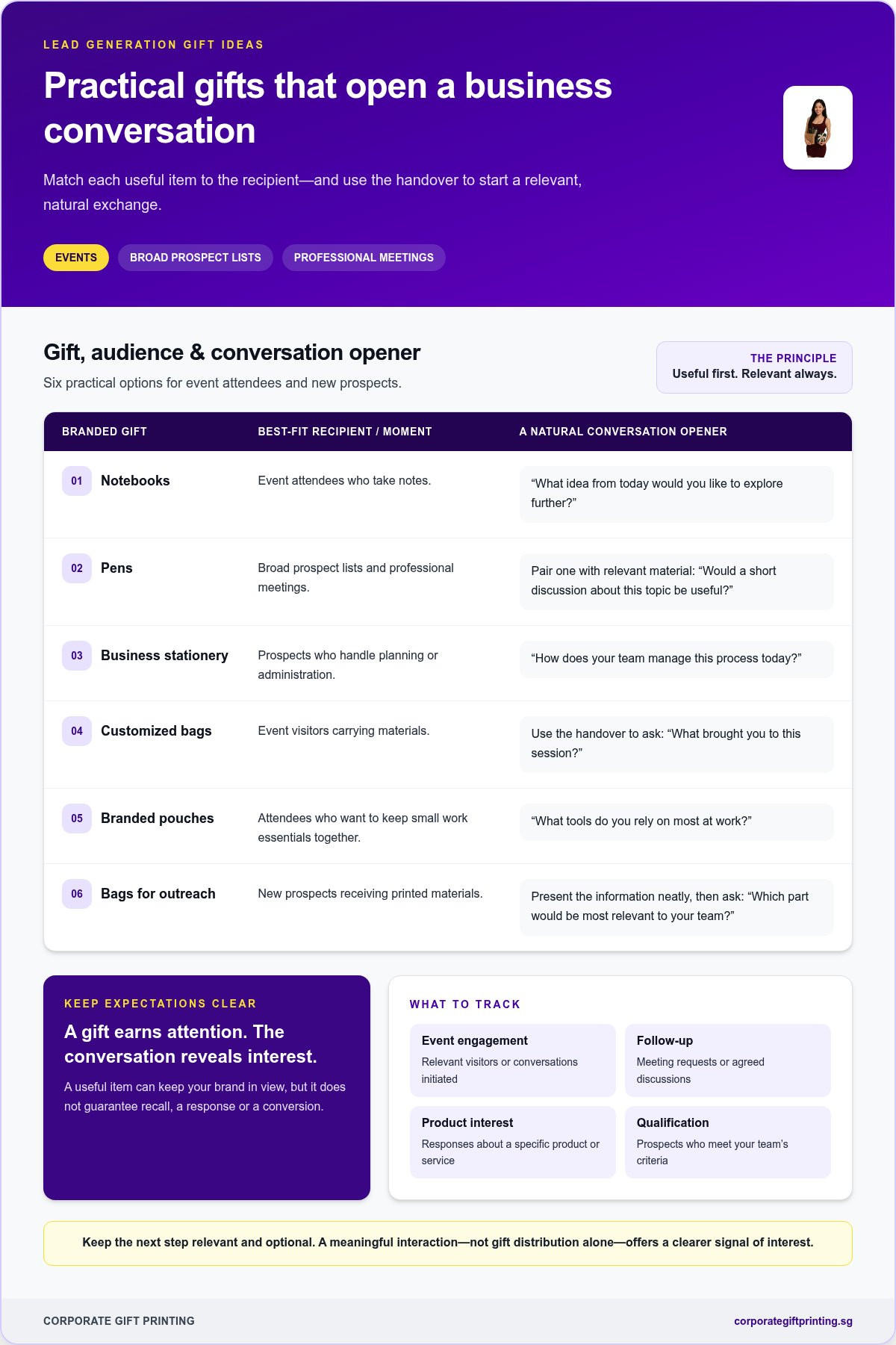
- Relevant event visitors or conversations initiated
- Meeting requests or agreed follow-up discussions
- Responses that indicate interest in a specific product or service
- Prospects who meet your team’s qualification criteria
Make the next step relevant and optional, such as choosing to receive a useful resource or arrange a conversation. That keeps follow-up respectful and gives your team a clearer signal than gift distribution alone.
12 Lead generation gift ideas, matched to business audiences
The strongest lead generation gift ideas connect a useful item to a specific audience and an easy next conversation. These options include business stationery, customized bags and pouches, electronic gifts, travel accessories and luxury corporate gifts. Tailor the branding to the item: clear, considered customization can reinforce a professional identity without overwhelming the gift.
Practical branded gifts for events and broad prospect lists
For event attendees and new prospects, consider items that fit naturally into a workday. Usefulness can keep a brand in view, but it doesn’t guarantee recall or a sales response. Introduce each gift in a way that opens a relevant conversation, then follow the recipient’s cues.
- Branded notebooks: For event attendees who take notes. Offer one during a session and ask, “What idea from today would you like to explore further?”
- Branded pens: For broad prospect lists and professional meetings. Pair one with relevant material and ask, “Would a short discussion about this topic be useful?”
- Business stationery: For prospects who handle planning or administration. Connect it to a work-focused conversation: “How does your team manage this process today?”
- Customized bags: For event visitors carrying materials. A bag can be useful beyond the event; use the handover to ask, “What brought you to this session?”
- Branded pouches: For attendees who want to keep small work essentials together. Pair the gift with a simple prompt: “What tools do you rely on most at work?”
- Bags for outreach: For new prospects receiving printed materials. Use a bag to present the information neatly, then ask, “Which part would be most relevant to your team?”
Considered gifts for warm prospects and key accounts
For active discussions or established relationships, choose an item that reflects the recipient’s needs and the purpose of the exchange. Presentation matters, but a premium gift should still feel appropriate to the relationship rather than like pressure to buy.
- Electronic corporate gifts: For prospects with a practical, work-related interest. Introduce a relevant topic and ask, “What would make this easier for your team?”
- Electronic gifts for business use: For warm leads already discussing a workflow. Use the gesture to continue the exchange: “Has your team found a solution for this yet?”
- Travel accessories: For business travellers or prospects who travel for work. Ask, “What’s the most demanding part of your work trips?”
- Travel accessories for client outreach: For a prospect with an ongoing business conversation. Connect the gift to a considerate check-in: “What’s coming up for your team this quarter?”
- Luxury corporate gifts: For key accounts where a more considered gesture suits the relationship. Ask, “What priorities should we keep in mind as we continue working together?”
- Premium gifts for warm prospects: For a relevant milestone or active discussion. Keep the next step low-pressure: “Would it help to revisit the proposal together?”
For more guidance on selecting an appropriate premium gesture, read this luxury corporate gifting guide. To explore branded options across these categories, visit branded corporate gift options.
How to compare gift ideas by lead-generation campaign
The right gift depends on who receives it and what your team plans to do next. Compare lead generation gift ideas by campaign context rather than treating one category as universally best. A practical item may suit broad event distribution, while a more tailored choice may make sense for a warm prospect or existing account. Neither choice guarantees a response; relevance and follow-up shape its usefulness.
| Campaign | Audience fit | Practical usefulness | Brand visibility | Follow-up opportunity |
|---|---|---|---|---|
| Event giveaways | Attendees and a broad mix of potential prospects | Choose business stationery, bags or pouches that serve a workday purpose. | Use may continue after the event, depending on the item and recipient. | Ask what brought the visitor to the event or what topic they’d like to explore. |
| Direct outreach | Named prospects selected for a relevant business reason | Match stationery, an electronic gift or a travel accessory to the recipient’s role or context. | Customization can reinforce a consistent, professional identity. | Refer to the outreach topic and offer a relevant next step, such as a discussion or resource. |
| Relationship building | Warm prospects, active accounts or established business contacts | Consider a tailored travel accessory or luxury corporate gift when it suits the relationship. | Thoughtful presentation can support a considered brand impression. | Use the gesture as a natural reason to check in on shared priorities or ongoing work. |
Match the gift to the campaign and relationship
For events with a broad audience, practical stationery or a bag may be easier to distribute and relevant to a range of attendees. For direct outreach, a gift chosen around a prospect’s business context can make the message feel more considered. In account nurturing, presentation and relationship history matter alongside usefulness. For example, a branded notebook could be distributed widely at an event or sent selectively with a note linking it to a prospect’s stated interests.
Use the comparison as a guide, not a ranking. Audience expectations, campaign purpose and planned follow-up all affect suitability. Ask whether the item fits your professional identity, whether the recipient is likely to use it and whether your team can reconnect without making the gift feel like an obligation. For stationery-specific considerations, see this business stationery guide.
Plan a gift campaign that can capture and qualify interest
A gift campaign works best when every step supports the same purpose. Before choosing from your lead generation gift ideas, decide who you want to reach, what you want to learn and what recipients can do next. A simple plan helps your team distinguish a thoughtful interaction from a distribution count.
- Define the audience. Identify the recipient group, such as event visitors, named prospects or existing accounts, and the business need that makes them relevant.
- Select an item. Match its usefulness and presentation to the audience and campaign objective.
- Prepare the branding. Choose a logo treatment that suits the item and maintains a polished, consistent identity.
- Plan distribution. Decide how the gift will reach recipients and how your team will introduce it in that context.
- Schedule follow-up. Assign responsibility and timing, and connect the message to the interaction or interest shown.
Set a measurable campaign outcome in advance, such as recipient responses, relevant enquiries or qualified conversations. The gift can prompt interest, but your follow-up process helps identify which prospects may be ready for a deeper discussion.
Prepare the gift, branding and recipient experience
Consider the full experience, from how the item reflects your brand to how the recipient receives it. A logo should be clear and suited to the gift rather than competing with its use. At an event, your team might hand over a branded pouch alongside a relevant resource. For direct outreach, a short note can explain why the gift is connected to the recipient.
A campaign-specific QR code or identifier can help connect a response to its source, provided it leads to a useful destination. Explain what recipients will find before inviting them to scan. Avoid collecting details that aren’t needed, and make any requested contact or ongoing communications clear and optional. This supports a respectful experience without assuming the recipient is interested.
Follow up thoughtfully and measure meaningful outcomes
Make the message specific to what the person said or did. If an attendee asked about a particular business challenge, follow up with information related to that topic rather than a generic sales pitch. Offer a relevant next step, such as choosing whether to arrange a discussion or receive further information, without pressure.
Track the campaign from distribution through to outcomes. Alongside the number of gifts handed out, record responses, accepted meeting requests and conversations that meet your team’s qualification criteria. Review which audiences engaged and which follow-up prompts felt relevant, then use those observations to shape the next campaign. Results will vary, so treat each campaign as an opportunity to learn, not a guaranteed return.
For branded merchandise that fits your audience and campaign plan, explore corporate gift sourcing and customization.
Turn gift ideas into a polished branded campaign with Corporate Gift Printing
A successful campaign connects five decisions: who you want to reach, what the campaign should achieve, which gift category suits the audience, how your brand appears on the item and what follow-up comes next. Corporate Gift Printing brings these choices together through corporate gift sourcing, customization and printing, helping businesses create branded merchandise with a consistent professional identity.
From campaign objective to a considered merchandise shortlist
Start with the recipient and purpose, then narrow the options. Bags and pouches may suit event distribution or practical outreach; electronic gifts can support a relevant business conversation; and travel accessories may fit recipients who travel for work. Business stationery offers a familiar professional option, while luxury corporate gifts may suit a considered gesture for an important relationship. The right category depends on context, not a universal ranking.
Share the intended audience and campaign objective as you shape a shortlist. A broad event campaign and a targeted relationship-building initiative have different needs, even if both aim to start a conversation. Sourcing and customization help align the selected category with the recipient, use and tone of the campaign, so the gift feels purposeful rather than interchangeable.
Make brand presentation part of the lead-generation experience
Branding should make the connection to your business clear while respecting the item itself. Consider how the logo treatment, presentation and recipient experience work together. A polished, relevant gift can support a professional first impression, but it can’t promise engagement or conversion. The follow-up plan remains essential: give recipients a natural, optional next step that relates to the campaign and lets your team learn from their response.
From customized bags and pouches to electronics, travel accessories, stationery and luxury gifts, Corporate Gift Printing sources, customizes and prints merchandise around your campaign direction. Bring together the audience, objective, gift category, branding and intended follow-up to move from a useful idea to a coherent execution. Explore custom corporate gift solutions for your next branded campaign.
Make your next gift campaign count
The most effective lead generation gift ideas start with a clear audience and campaign goal. Choose a gift that fits the recipient, then give it a role beyond distribution: invite a conversation, support a relevant next step and help your team recognize genuine interest.
Practicality and presentation work together. Whether you’re considering bags and pouches, electronics, travel accessories, stationery or luxury corporate gifts, the best fit depends on the campaign and relationship. Thoughtful branding can strengthen a professional impression, while timely, permission-based follow-up helps turn a response into a more meaningful business conversation.
Corporate Gift Printing sources, customizes and prints branded gifts for business clients, helping bring campaign plans to life across these categories. Start with the audience and purpose, then shape the merchandise and branding around them. Explore custom corporate gift solutions and take the next step toward a considered campaign that reflects your brand and respects your prospects.
Frequently Asked Questions
What are the best gifts for lead generation?
The best gifts for lead generation are useful to the intended audience and suited to your campaign goal. Business stationery or customized bags and pouches can work for broad event audiences, while electronic gifts, travel accessories or luxury corporate gifts may suit targeted outreach or key accounts. Choose based on the recipient’s needs, then pair the gift with a relevant conversation prompt and a clear, optional next step.
Do promotional gifts actually generate leads?
Promotional gifts can support lead generation, but distributing an item alone doesn’t make someone a lead. A gift may attract attention or create an opening for conversation; a response can show engagement. Your team still needs to understand the prospect’s interest and fit before treating them as qualified. Plan how to capture relevant responses and follow up appropriately, rather than judging success by the number of gifts handed out.
What should I put in a corporate giveaway?
Include a branded item that fits the recipient and purpose, such as business stationery, a bag or pouch, an electronic corporate gift, or a travel accessory. Keep the branding clear and appropriate to the item. A short note can explain why the gift is relevant and suggest a useful next step. If you use a QR code, direct recipients to a clear, valuable destination and explain what they’ll find there.
How do I choose a gift for a trade show or business event?
Choose an event gift that is practical for attendees and gives your team a natural opening for conversation. Business stationery, bags and pouches are options for broad audiences; a more targeted event may call for a category relevant to its attendees. Decide what response you hope to encourage, such as discussing a business need or requesting information, and make the follow-up invitation clear without implying that a gift guarantees attendance or sales.
Are expensive gifts better for attracting business leads?
Not necessarily. A higher-value gift isn’t automatically more relevant or more effective, and an expensive gesture may feel out of place if it doesn’t suit the relationship or campaign. Prioritise recipient usefulness, appropriate presentation and a genuine reason to reconnect. For a broad event audience, a practical branded item may fit; for a warm prospect or key account, a more considered gift may be appropriate when it reflects the relationship and company policies.
How can I measure whether a gift campaign generated leads?
Set a campaign goal and define what counts as a meaningful response before distributing gifts. Track distribution, but also record actions such as replies, information requests, meeting bookings and conversations that meet your team’s qualification criteria. If you use a campaign-specific QR code or identifier, monitor relevant responses from that route. Review which audience and follow-up prompts led to useful conversations, then use those observations to inform future campaigns.
What makes a corporate gift useful for prospecting?
A corporate gift is useful for prospecting when it fits the recipient, reflects your professional brand and creates a natural opening for a relevant conversation. The item shouldn’t carry the whole sales message. Instead, connect it to the prospect’s context, invite an optional next step and follow up based on their stated interest. This makes the gesture more considered and gives your team a better basis for assessing whether further discussion is appropriate.