The best corporate gift makes the recipient feel considered before it makes the brand visible. That’s the heart of good corporate gifting etiquette, whether you’re thanking a client, recognising an employee or strengthening a business partnership. A useful item is only part of the decision: the gift should feel appropriate, respect workplace policies and avoid creating any sense of obligation.
It’s reasonable to think carefully about how much branding is appropriate, whether a gift suits the recipient and how to account for different preferences. In Singapore, professional generosity works best when it’s sincere, measured and mindful of the recipient’s circumstances.
This guide explains how to choose, personalise and present corporate gifts with confidence. You’ll learn how to match a gift to its purpose and recipient, select a suitable level of branding, and keep company policies and cultural considerations in view. From practical bags, electronics and stationery to more elevated options, thoughtful choices can express your company’s identity without overshadowing the relationship.
Key Takeaways
- Use corporate gifting etiquette to keep recipient comfort, professional context and sincere intent ahead of brand visibility.
- Review both organisations’ gift policies before selecting or sending a gift, and consider the recipient’s cultural and workplace context.
- Match the gift to the recipient and occasion by weighing practical usefulness, personalisation and the right level of branding.
- Plan a polished handover with suitable timing, discreet delivery and a concise message explaining why you’re giving the gift.
- Use a pre-gifting checklist to review purpose, recipient needs, policy, presentation and follow-up before sending.
What corporate gifting etiquette means, and why the gesture matters
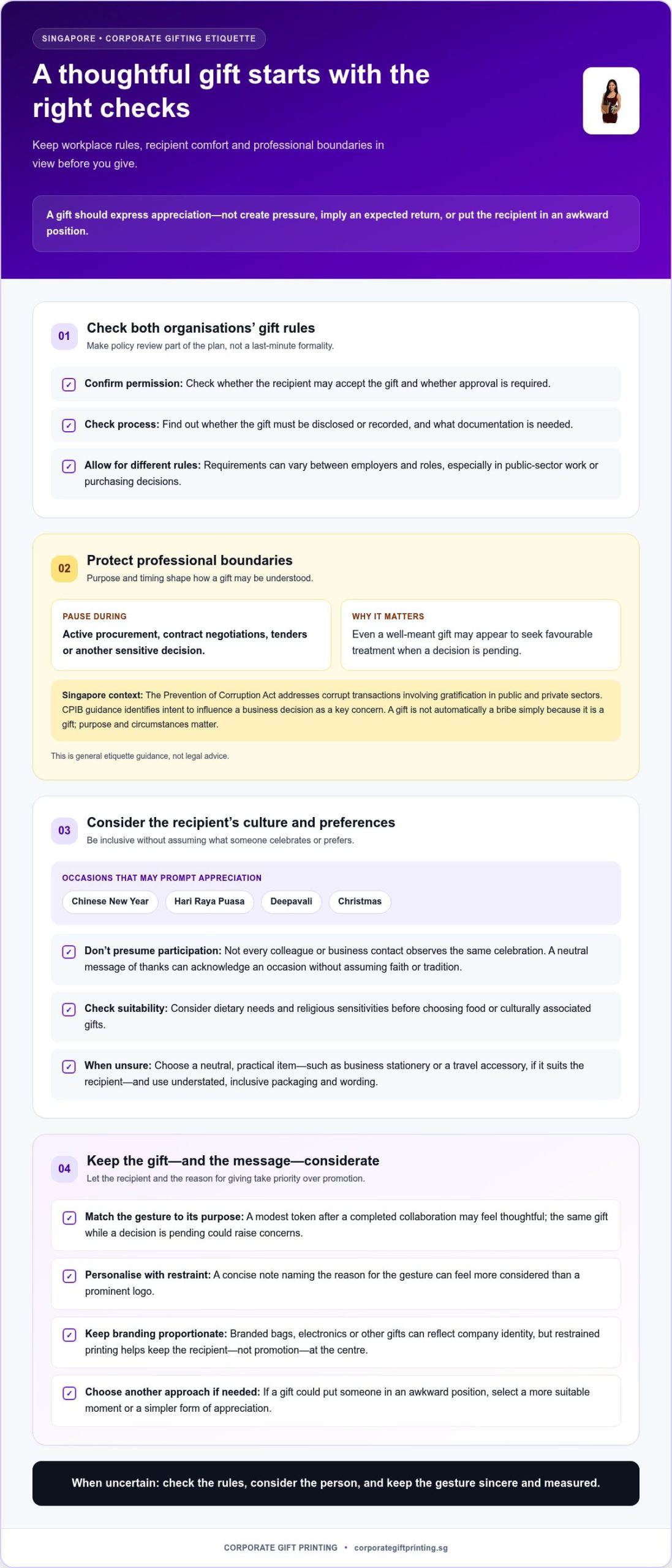
Corporate gifting etiquette means choosing and presenting business gifts in a way that respects the recipient, the professional relationship and the circumstances. A gift should express appreciation, not create pressure or suggest that something is expected in return.
That distinction gives the gesture its meaning. Gift-giving can help build social connection, as explored through the principles of a gift economy, but business relationships also have professional boundaries. Purpose, timing and context shape how a gift is received. A modest token after a completed collaboration may feel thoughtful; the same gift while a decision is pending could raise concerns.
What makes a corporate gift feel appropriate?
Start with a genuine reason, such as welcoming a new team member, recognising a work milestone or thanking a client after a completed project. Then consider the formality of the relationship and what would feel comfortable within it. A useful, well-made item can show care without demanding attention. Business stationery may suit a professional milestone, while a travel accessory may be relevant to someone who travels for work. The right choice depends on the person and occasion, not novelty alone.
Personalisation can make a gift feel considered without being elaborate. A concise note naming the reason for the gesture may mean more than a prominent logo. Branded bags, electronics or other corporate gifts can reflect a company’s identity, while thoughtful selection and restrained printing keep the recipient, rather than the promotion, at the centre.
When can a business gift create the wrong impression?
Pause before giving a gift during active procurement, contract negotiations or another sensitive decision. Even a well-meant gesture may appear to seek favourable treatment. Singapore’s Prevention of Corruption Act makes offering or giving a bribe an offence, and a gift intended to influence a business decision may cross that line. The purpose and surrounding circumstances matter, not simply the gift’s price.
Prominent branding can also change the message. If a gift looks more like an advertisement than an expression of appreciation, the recipient may feel used as a marketing channel. Keep branding proportionate and make the personal reason for giving clear.
Before choosing or presenting a gift, review your organisation’s policy and the recipient’s. Rules may differ between employers and roles, particularly where public-sector work or purchasing decisions are involved. If a gift could put someone in an awkward position, choose a more suitable moment or a simpler form of appreciation. Good etiquette protects the relationship as carefully as it expresses gratitude.
Corporate gift etiquette in Singapore: policies, culture and professional boundaries
A considerate gift still needs to fit the rules and expectations of the people involved. Don’t assume one approach suits every organisation or recipient. Check both gift policies before selecting or sending an item, including requirements for approval, disclosure, acceptance or recording. A recipient may need to decline a gift or report it, even when it’s offered with genuine appreciation.
How should companies handle gift policies and conflicts of interest?
Make the policy review part of gift planning, not a last-minute formality. Confirm who can approve a gift, whether the recipient may accept it and what documentation is required. Where procedures call for a record, note the purpose, recipient and approval. If the recipient is evaluating a contract, tender or supplier, postpone the gesture or choose a non-gift expression of thanks. Timing can affect how an offer is perceived, even when the giver’s intentions are sincere.
Singapore’s Prevention of Corruption Act addresses corrupt transactions involving gratification in both public and private sectors. CPIB guidance identifies intent to influence a business decision as a key concern; a gift isn’t automatically a bribe simply because it is a gift. The circumstances and purpose matter. This section offers general etiquette guidance, not legal advice.
How can gifts respect Singapore’s cultural diversity?
Singapore’s communities include people with different customs, beliefs and personal preferences. Chinese New Year, Hari Raya Puasa, Deepavali and Christmas can all be occasions for appreciation, but don’t assume every colleague or business contact observes a particular celebration. A neutral message of thanks can recognise an occasion without presuming the recipient’s faith or traditions. For a useful overview of local considerations, see Business Etiquette in Singapore.
Consider dietary needs and religious sensitivities before choosing food or gifts with cultural associations. If you don’t know the recipient’s preferences, choose a neutral, practical item and use understated, inclusive packaging and wording. Business stationery or a travel accessory may avoid the dietary questions that come with a food hamper, provided the item suits the recipient’s needs and role.
Align policy checks, recipient considerations and presentation from the outset. Branded corporate gifts can express a company’s identity while keeping the recipient’s comfort at the centre.
How to choose a corporate gift that suits the recipient and occasion
A suitable gift starts with the recipient’s routine, not a catalogue or a logo. Consider what the person does, how you know them and why you’re giving the gift. An item that fits their work life can feel thoughtful; an impressive gift that misses their needs may feel impersonal. This recipient-first approach is central to good corporate gifting etiquette.
Use the comparisons below as a starting point, then adjust for the individual and your organisation’s gifting policies. The Emily Post Institute’s guidance on corporate gift giving etiquette also highlights the importance of workplace roles and rules.
| Recipient and occasion | Practical use | Personalisation | Branding intensity |
|---|---|---|---|
| Colleague or client, everyday appreciation | Choose a bag, pouch or stationery suited to regular work use. | Add a brief personal message or discreet detail. | Subtle logo placement keeps the item versatile. |
| Partner or employee who travels for work | Consider a travel accessory that fits their professional routine. | Personalise the message to the milestone or shared work. | Keep branding refined and easy to use in different settings. |
| Senior partner or significant formal milestone | Consider a more elevated gift if it suits the relationship and policy. | Make the reason for the gesture clear. | Let quality and presentation lead; avoid making the gift feel like an advertisement. |
Which gift category fits the recipient and relationship?
For everyday professional relationships, bags, pouches and business stationery can be practical choices when they suit the recipient’s working habits. Electronics may fit a work-related need, while travel accessories make sense for someone whose role regularly involves travel. These are options, not rankings: usefulness depends on the person, occasion and existing relationship. Treat luxury corporate gifts as occasion-sensitive choices, not automatic upgrades. For more formal situations, explore this guide to luxury corporate gifts.
How much branding is appropriate on a corporate gift?
Branding should support the gift, not compete with its purpose. Choose a legible placement that leaves the item useful beyond the moment it’s given. A subtle logo may feel more personal than a dominant mark, particularly for a one-to-one gesture. For group gifting, consistent branding can still look polished when it’s proportionate. On stationery, consider how the logo will appear during everyday use. A restrained mark can keep the item practical while still making the company identifiable.
How to present and deliver a corporate gift with good etiquette
Presentation completes the gesture. Even a well-chosen gift can feel awkward if it arrives at an inconvenient moment, goes to the wrong person or comes with a message that leaves its purpose unclear. A simple process helps corporate gifting etiquette carry through from preparation to follow-up.
Prepare the gift and delivery
Before arranging delivery, confirm the recipient’s name, role and preferred workplace delivery details. Follow any gift-acceptance procedures, including whether the item should go to an office, a named contact or another approved location. This matters especially when the recipient works in a setting with formal receiving procedures.
Choose a suitable occasion, such as a completed project or work anniversary, so the reason for giving is easy to understand. Avoid presenting a gift in a way that puts the recipient on the spot, such as expecting them to open it or respond in front of a group. A discreet handover or delivery gives them room to acknowledge it comfortably.
Make the first impression considered
Use neat packaging that suits the gift and the professional relationship. Clean, secure wrapping and a well-finished logo can signal care without turning the item into an advertisement. Check that printed branding is clear, correctly placed and visually balanced with the gift. The overall effect should feel polished, not showy.
Add a short note that states why you’re giving the gift and expresses appreciation without implying an obligation. For example: “Thank you for your collaboration on the recent project. We appreciate the partnership.” Keep the wording warm, specific and professional. Avoid language that suggests the recipient owes a favour or that the gift is linked to a pending decision.
Coordinate gifts for multiple recipients
For a group, apply consistent principles so recipients are treated fairly, while allowing relevant personalisation where appropriate. A shared gift category or presentation style can create a cohesive experience; individual notes can still recognise a person’s contribution or milestone.
- Check each recipient’s name, role and delivery information against the latest details.
- Review the item and message for each person, including spelling and any personalisation.
- Align packing, dispatch and record-keeping with internal procedures and recipient preferences.
Build in a final review before anything is sent. Confirm that each package contains the intended gift and note, and that the delivery method respects workplace procedures. After delivery, a brief follow-up can confirm receipt and offer thanks, but keep it low-pressure. Thoughtful execution makes the gesture feel seamless from first impression to final acknowledgement.
For branded gifts prepared with care, plan your corporate gift presentation with the recipient and occasion in mind.
A practical corporate gifting etiquette checklist for branded business gifts
A final review turns a thoughtful idea into a considerate gesture. Before approving a branded business gift, use this checklist to confirm that the purpose is clear, the recipient is comfortable and each detail supports a professional impression. It puts corporate gifting etiquette into practice before your team sources, personalises and sends a gift.
What should a team check before approving a gift?
- Purpose: Identify why you’re giving the gift and what occasion or relationship it recognises. Make sure the reason is sincere and easy to explain.
- Recipient and relationship: Consider the recipient’s role, your professional connection and whether the gesture feels proportionate to that relationship.
- Policies and timing: Review both organisations’ gift policies, including approval, disclosure and acceptance procedures. Pause if the recipient is involved in a sensitive decision.
- Usefulness and preferences: Choose an item that fits the recipient’s routine. Account for known preferences, cultural considerations and any relevant dietary or practical needs.
- Branding: Check that the logo is legible and appropriately placed. The gift should remain useful and feel considerate, not like an advertisement.
- Presentation: Review the packaging, accompanying note and delivery approach. Keep the message concise, specific and free of any implied expectation.
- Ownership and follow-up: Assign someone to secure approvals, verify recipient names and delivery details, and coordinate distribution. Decide who will record the gift or follow up where internal procedures require it.
For multiple recipients, apply the same selection and presentation standards across the group, while allowing relevant personalisation. A final check of each item, name and note can prevent small errors from distracting from the gesture. If a recipient’s preferences or acceptance rules make a gift unsuitable, choose another appropriate form of appreciation.
How can branded gifts support a considerate gesture?
A relevant item gives the recipient a practical reason to use the gift; restrained branding lets the relationship remain the focus. Careful sourcing, personalisation and professional printing can help a company express its identity consistently, whether the gift is a bag, electronic item, travel accessory, stationery or a more elevated option. The choice should still reflect the recipient and occasion, rather than relying on branding to create meaning.
With the checklist complete, you can move from intention to execution with greater clarity. If you’re ready to shape a recipient-conscious gift, plan a considered corporate gift with suitable product selection and polished branding.
Make your next business gift thoughtful and polished
Strong corporate gifting etiquette comes down to a few considered choices: give for a clear and appropriate reason, select something that suits the recipient, and keep branding and presentation in proportion. Reviewing both organisations’ gift policies and respecting individual preferences helps ensure a gesture of appreciation feels comfortable rather than complicated.
A useful gift can carry your company’s identity without making promotion the point. Bags and pouches, electronics, travel accessories and business stationery each offer different ways to make a gift relevant to a recipient’s routine. Custom sourcing, personalisation and professional printing bring those choices together with consistency and care.
Whether you’re recognising an employee, thanking a client or marking a valued partnership, start with the relationship and occasion, then shape the gift around them. Create a thoughtful branded business gift with a recipient-first approach. A considered gesture can leave a warm impression and help strengthen the professional relationships that matter.
Frequently Asked Questions
What is corporate gifting etiquette?
Corporate gifting etiquette is the practice of choosing, approving and presenting business gifts with respect for the recipient, the relationship and the professional context. It means giving for a clear reason, such as appreciation or a milestone, while considering workplace policies and personal preferences. A useful, appropriate gift with restrained branding can express goodwill without creating pressure or suggesting that the recipient owes anything in return.
Is it appropriate to give a branded gift to a client?
Yes, a branded gift can be appropriate if it suits the occasion, respects both organisations’ policies and feels proportionate to the relationship. Choose something the client can use, such as business stationery, a bag or a travel accessory relevant to their routine. Keep the logo tasteful so the gift feels like a sincere gesture rather than an advertisement, and include a brief note explaining why you’re giving it.
Can a corporate gift be considered an attempt to influence a business decision?
Yes. In Singapore, a gift may raise corruption concerns if it’s offered or given with the intention of influencing a business decision. The Prevention of Corruption Act applies to bribery in both public and private sectors, and the circumstances and intent matter, not just the gift itself. Avoid giving gifts during active procurement or negotiations, follow applicable policies, and seek qualified legal advice for situation-specific guidance.
How do I choose a culturally considerate corporate gift in Singapore?
Consider the individual rather than making assumptions based on someone’s background. Where possible, account for personal preferences, dietary needs and religious sensitivities; if you’re unsure, choose a neutral, practical item instead of food or culturally specific presentation. Chinese New Year, Hari Raya Puasa, Deepavali and Christmas may be meaningful occasions for some recipients, but not everyone observes them. Inclusive wording keeps your message warm without presuming shared traditions.
When should a company avoid giving a corporate gift?
A company should pause if a gift could put the recipient under pressure or conflict with either organisation’s rules. This includes periods when the recipient is evaluating a contract, supplier or tender, as well as situations where acceptance or disclosure procedures aren’t clear. Consider a note of thanks or another suitable form of appreciation instead. The gesture should support a professional relationship, not complicate a decision or create discomfort.
What should a company include in a corporate gift message?
Keep the message concise, sincere and clear about the reason for giving. Mention the occasion or contribution, express appreciation and use a professional tone. For example: “Thank you for your collaboration on the project. We appreciate the partnership.” Avoid language that implies a favour is expected, connects the gift to a pending decision or pressures the recipient to respond publicly. A personal, straightforward note often adds more meaning than elaborate wording.
How much branding should a corporate gift have?
Use enough branding to identify your company while keeping the item useful and comfortable for the recipient. A legible logo placed discreetly can feel more considered than a large, dominant mark, particularly on a personal appreciation gift. Think about where and how the recipient may use the item, then keep the design aligned with that setting. The gift’s relevance and quality should carry the gesture; branding should support it, not overwhelm it.