A gift labelled “green” can create more brand risk than a conventional one if no one can explain what makes it responsible. Choosing eco friendly corporate gifts singapore businesses can stand behind takes more than selecting bamboo, recycled-looking packaging or a sustainability-themed design. Check the item’s materials, sourcing information, expected use and packaging before making a claim about it.
It’s understandable to want a gift that feels thoughtful, looks polished and reflects your company’s values. A vague environmental claim can weaken that impression, especially if a recipient asks what it means. Start by considering whether the item fits the recipient’s needs and is likely to be used, then verify the information behind any environmental claims.
This guide offers a practical way to shortlist gifts, assess supplier information and customise the final result with care. Use the checklists to compare materials, certifications, packaging and sourcing, and to match gift categories with recipients and occasions. Bags, travel accessories, stationery and electronics are options to assess, not proof of sustainability in themselves. The aim is a considered, branded gift that feels right to give and is easier to explain with confidence.
Key Takeaways
- Choose gifts for their likely use and useful life, not just a green-sounding material or label.
- Use a consistent shortlist process: define the purpose and recipient, verify product claims, review branding, and confirm order details.
- Assess bags, stationery, travel accessories and electronics item by item rather than assuming a category is sustainable.
- Ask suppliers what each environmental claim covers and request supporting product information before approving an item.
- Before ordering, check recipient fit, durability, evidence, branding and packaging. Keep a record of claims you plan to communicate.
Why choose eco-friendly corporate gifts in Singapore?
A corporate gift can express appreciation and reflect the values behind your business. But a “green” label alone doesn’t show whether an item is a responsible choice. When sourcing eco friendly corporate gifts singapore recipients may value, look for specific product information, consider how the gift will be used, and avoid claims that go beyond the available evidence.
Eco-friendly corporate gifts are items selected with their intended use, durability, materials and end-of-life options in mind, with environmental claims supported by checkable product information. This is a practical way to define the term, not a guarantee that any gift has no environmental impact. A useful, well-made item may support a thoughtful business relationship, but usefulness alone doesn’t prove that it is environmentally preferable.
What makes a corporate gift a more responsible choice?
Assess the whole decision rather than relying on one attractive feature. Consider whether recipients are likely to use the gift, how well it is made, what materials it contains, and what options exist when it is no longer usable. A material claim describes one aspect of a product. It doesn’t automatically explain how the item was made, how long it may last or what happens at the end of its useful life.
For example, if a supplier says an item contains recycled material, ask which component the claim refers to and request supporting details. Check whether the packaging and customisation are covered by the same claim or described separately. Clear answers help distinguish a substantiated product detail from a broad impression. For a useful introduction to how to spot greenwashing, look for wording that sounds sweeping but gives no specific evidence.
Why Singapore businesses should make claims carefully
Recipients may interpret words such as “sustainable” or “eco-friendly” as factual statements about both the gift and the company presenting it. If the wording is more confident than the evidence, it can undermine the thought behind the gesture. Ask suppliers for precise material descriptions, relevant certification details and sourcing information. Keep documents that support the claims you decide to use, and check exactly what each piece of evidence covers.
Treat sourcing as a process, not a search for products that are universally green. Bags and pouches, stationery, travel accessories and electronics can all be considered, but no category is automatically responsible. The right choice depends on recipient fit, intended use, product-level evidence and presentation. This gives your team a more credible basis for selecting and describing a gift.
How to assess eco-friendly corporate gifts before you shortlist them
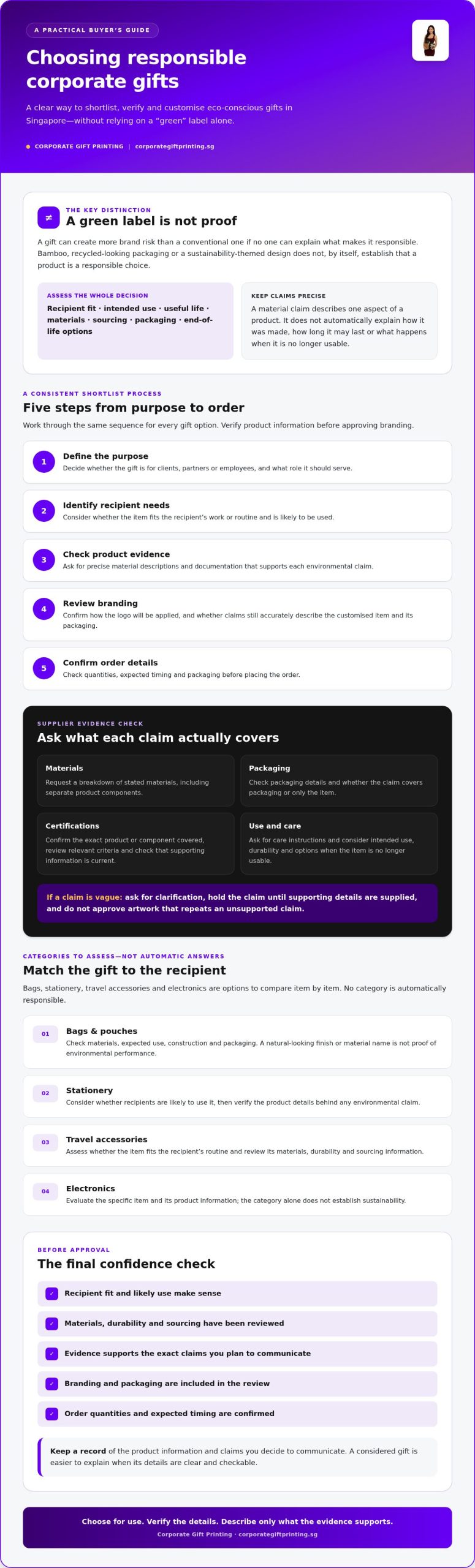
A clear evaluation sequence helps your team compare options on more than appearance. When considering eco friendly corporate gifts singapore businesses can source, start with the recipient and intended use. Check the product evidence before deciding on branding or approving an order.
- Define the purpose. Decide whether the gift is for clients, partners or employees, and what role it should serve.
- Identify recipient needs. Consider whether the item fits their work or routine and is likely to be used.
- Check product evidence. Ask for precise material descriptions and documentation that supports each environmental claim.
- Review branding. Confirm how the logo will be applied and whether any claim still accurately describes the customised item and its packaging.
- Confirm order details. Check quantities, expected timing and packaging before placing the order.
If a supplier uses broad terms such as “green” without explaining them, ask for clarification. Hold the claim until the supplier identifies the relevant product components and supplies evidence. Don’t approve artwork that repeats an unsupported claim, and don’t assume a material name or natural-looking finish proves a product’s environmental performance.
Which product details should a buyer verify?
Request a breakdown of the item’s stated materials, including separate components, along with packaging details and care instructions. If the supplier mentions a certification, confirm the exact product or component it covers, review the relevant criteria and check that the supporting information is current. A reference to the Singapore Green Labelling Scheme is a claim to investigate, not automatic proof about every part of a gift or its lifecycle.
How to compare usefulness, durability, and end of life
For each shortlisted item, ask whether recipients are likely to use and keep it, and whether it can withstand that use. Check maintenance needs and consider whether replacement parts or refills matter for the product. An item that is difficult to care for or quickly becomes unusable may be a poor fit, regardless of its label.
Then ask what practical reuse or disposal options exist when the item reaches the end of its useful life. Don’t assume a material is accepted in local recycling streams. Check the specific disposal guidance instead. This evidence-and-use comparison can guide choices across bags and pouches, business stationery, travel accessories and electronic gifts without treating any category as inherently sustainable.
Once your criteria are clear, explore customised corporate gift options and assess each item against the same checklist before confirming your order.
Which eco-conscious gift categories suit different business needs?
The right category depends on who will receive the gift, how they might use it and what product-level information the supplier can provide. Bags, business stationery, travel accessories and electronics are all options to consider, but none is automatically responsible because of its name, material or appearance. Use the comparison below to connect recipient fit with practical questions to ask.
| Category | Potential recipient and use | What to verify | Branding consideration |
|---|---|---|---|
| Bags and pouches | Employees or clients who may use them for work or everyday carrying. | Fabric composition, construction, care instructions and likely repeat use. | Check whether the logo application suits the material and intended use. |
| Business stationery | Meeting attendees, partners or staff who use writing and desk items. | Materials, useful life, refill options where relevant, and packaging details. | Keep the mark clear and proportionate to the item. |
| Travel accessories | Recipients who travel for work or need practical items on the move. | Materials, durability, care requirements and packaging. | Consider whether customisation affects the item’s finish or function. |
| Electronics | Recipients with a clear use for the selected device or accessory. | Specifications, expected use, packaging and available support information. | Confirm the logo method and placement without letting branding outweigh usefulness. |
A familiar material or category isn’t proof of sustainability. The details matter, including components, construction, expected useful life and packaging. Ask suppliers to substantiate claims about the specific item rather than relying on a label or natural-looking finish.
When bags, stationery or travel accessories may fit
Match the gift to the occasion and the recipient’s routine. A bag may suit regular use if its construction and care requirements support that purpose. Stationery works best when recipients are likely to use it, while travel accessories should meet a genuine need. Assess packaging and expected useful life alongside material details, then choose branding that preserves a polished, practical finish.
How to assess electronics without overstating their benefits
Convenience alone doesn’t make an electronic gift sustainable. Check the specifications, likely use, packaging and any relevant support information, then weigh those details against how useful the item is likely to be. If the supplier makes an environmental claim, ask which components it covers and request supporting information before repeating the claim in company communications.
Responsible selection doesn’t require a plain or low-quality presentation. A considered design, suitable logo placement and well-chosen item can feel refined while keeping product claims precise and verifiable.
How to source and customise eco-friendly corporate gifts in Singapore
A clear brief helps suppliers suggest gifts that suit recipients, reflect your brand and support claims you can explain. Before requesting options, decide who will receive the gifts, their purpose, the order quantity, the required delivery timing and which sustainability priorities matter most. Treat those priorities as questions for suppliers to answer with product-level evidence, not as assumptions about a material or category.
For each environmental claim, ask exactly what it covers. Does it refer to the main material, a particular component, the packaging or the entire product? Request precise specifications and supporting documents, and confirm that they relate to the item being proposed. If an answer is unclear, pause before approving artwork or placing an order. This helps keep the gift’s sustainability story aligned with what your team can substantiate.
What to include in a supplier brief
Make your request specific enough for suppliers to recommend relevant options and for your team to assess them consistently. Include:
- Recipients and purpose: State whether gifts are for clients, employees or partners, and how you expect them to be used.
- Order scope and timing: Specify the quantity and when the gifts need to be delivered.
- Brand requirements: Provide logo artwork, preferred placement and any presentation considerations.
- Environmental priorities: Ask which materials are used, what evidence supports each claim, and whether claims cover individual components or the complete item and packaging.
- Approval details: Request confirmation of product specifications, customisation and packaging before signing off on the final artwork and order.
This process helps you compare proposals on consistent terms. A supplier’s description is a starting point. Retain relevant documentation and make sure your own communications don’t overstate what it supports.
How to keep branding aligned with the sustainability goal
Customisation should strengthen the gift’s identity without obscuring its purpose. Choose a logo size and placement that suit the item’s material and expected use, then check whether the application could affect its appearance or function. Ask whether packaging can be reduced or made more purposeful, and confirm its materials and claims separately. A restrained, well-positioned mark can still look polished.
If stationery is on your shortlist, the business stationery and gifting guide offers another reference for considering brand presentation. For help sourcing and customising corporate gifts, explore corporate gift sourcing and customisation and use your brief to guide the discussion.
Turn eco-friendly corporate gift criteria into a confident order
A confident order matches the gift to its recipient and purpose, with product evidence to support any environmental statement your company plans to make. For businesses sourcing eco friendly corporate gifts singapore, a documented approval process helps carry the original brief through product selection, customisation and delivery without overstating what a gift can achieve.
A final checklist before approving your corporate gifts
Review the item and its presentation together before confirming the order. Make sure the gift suits its recipients and has a credible use case, then check the specifications and evidence for every environmental claim. Keep the supporting information so colleagues can refer to it if a claim appears in internal or external communications.
- Recipient fit: Is there a clear reason recipients are likely to use the item?
- Product evidence: Do specifications and supporting documents substantiate each claim and clarify which components it covers?
- Durability: Does the item appear suitable for its intended use and care requirements?
- Branding and packaging: Are logo placement, presentation and packaging purposeful and accurately described?
- Order details: Have quantities and delivery timing been confirmed alongside the final product and customisation details?
If a claim remains unclear, resolve it before approval rather than relying on broad wording. Keep the evidence with the final product details so the basis for sustainability statements remains accessible after the order is placed.
How to make the gift feel considered, not performative
A gift feels more sincere when it suits the relationship or occasion, rather than serving mainly as a visible sustainability statement. Keep environmental language specific and proportionate to the evidence. A verified material detail may be appropriate; a broad claim about the whole item may not be if documentation covers only one component. Thoughtful selection and restrained branding can still create a polished impression.
Custom sourcing and printing can help translate a company brief into a branded item, from bags and pouches to electronics, travel accessories, business stationery and luxury gifts. The category itself doesn’t establish environmental credentials, so review each proposed product on its own merits. Move from brief to product review, evidence check and final approval in clear steps.
For a considered next step, discuss a customised corporate gift brief that sets out your recipients, purpose, brand requirements and sustainability priorities.
Make your next corporate gift a considered one
A responsible gift starts with a clear purpose and a good fit for the people receiving it. Compare options by expected use and durability, then verify material, sourcing or certification claims at the product level. Keep the supporting information on file, and make sure your branding and packaging align with what you can confidently say. That’s a practical foundation for choosing eco friendly corporate gifts singapore businesses can present with care.
The right choice depends on your recipients, occasion and requirements. Custom sourcing and professional logo printing can help translate your brief into a polished branded gift, while keeping product claims grounded in evidence. Consider bags and pouches, electronics, travel accessories, business stationery or luxury gifts according to the recipient and purpose.
Ready to shape your brief? Discuss your customised corporate gift requirements and explore suitable options with your priorities in view. Thoughtful selection and clear information give you a practical basis for choosing a gift that reflects care for your business relationships.
Frequently Asked Questions
What makes a corporate gift eco-friendly?
An eco-friendly corporate gift is a considered choice supported by specific, checkable information about the item. Assess its intended use, expected durability, materials, packaging and realistic end-of-life options together. A label or familiar material alone can’t establish the product’s overall impact. A useful gift may support a thoughtful business relationship, but usefulness doesn’t prove environmental benefits. Look for evidence that matches any claim you plan to make.
How can I verify sustainability claims for corporate gifts in Singapore?
Ask the supplier for precise material descriptions and supporting documents, then check which product components each claim covers. If a certification is mentioned, verify the product or component it applies to and whether the information is current. The Singapore Green Labelling Scheme is voluntary, so a reference to it should be checked rather than assumed to cover an entire gift. Keep relevant evidence for claims used in company communications.
Which eco-friendly corporate gifts are useful for employees and clients?
Choose by recipient and routine, not by a category’s reputation. Bags and pouches may suit people who regularly carry work items; business stationery may fit recipients who use it in meetings; travel accessories can suit frequent travellers; and electronics should meet a clear practical need. For eco friendly corporate gifts singapore businesses are considering, verify the specific item’s materials, construction, packaging and likely use before describing it as environmentally preferable.
Are recycled materials always the most sustainable choice for a corporate gift?
No. A recycled-material claim describes one aspect of a product, not necessarily its full lifecycle or overall impact. Ask which component contains the material and review durability, care needs, packaging and end-of-life options too. Compare the evidence with the gift’s likely usefulness. Don’t treat a recycled label as a complete sustainability assessment, and avoid broader claims unless supporting information substantiates them.
Can corporate gifts be customised without undermining sustainability?
Yes. Customisation can remain considered if the logo treatment suits the item’s material and use, and the presentation avoids unnecessary additions. Ask how the logo will be applied, whether it could affect the item’s function, and what packaging is included. Check environmental claims separately for the product, customisation and packaging. Professional logo printing can create a polished result, but branding itself doesn’t establish an item’s environmental credentials.
How do I choose eco-friendly corporate gifts for a bulk order?
Start with a supplier brief that states the recipients, purpose, quantity, delivery timing, brand requirements and sustainability priorities. Request product specifications and evidence for each environmental claim, including which components it covers. Compare options for recipient fit and durability, then review branding and packaging. Confirm the final product details and order scope together, and keep supporting documents so any sustainability statements made to employees or clients remain accurate.